
TransGreenland Electric Challenge
Project – TransGreenland Electric Challenge
We are in the midst of a global electric and solar revolution, and the Polar Regions cannot be left behind.
The TransGreenland Electric Challenge is a pioneering project focused on exploring and pushing the limits of off-grid electric systems for transportation and exploration in the most remote environments, powered exclusively by solar energy.
Its main objective is to investigate the potential of fully electric mobility in extreme polar conditions and to evaluate its real-world performance across the Greenland Ice Cap, using only renewable energy sources.


2025 Expedition – First Field Test
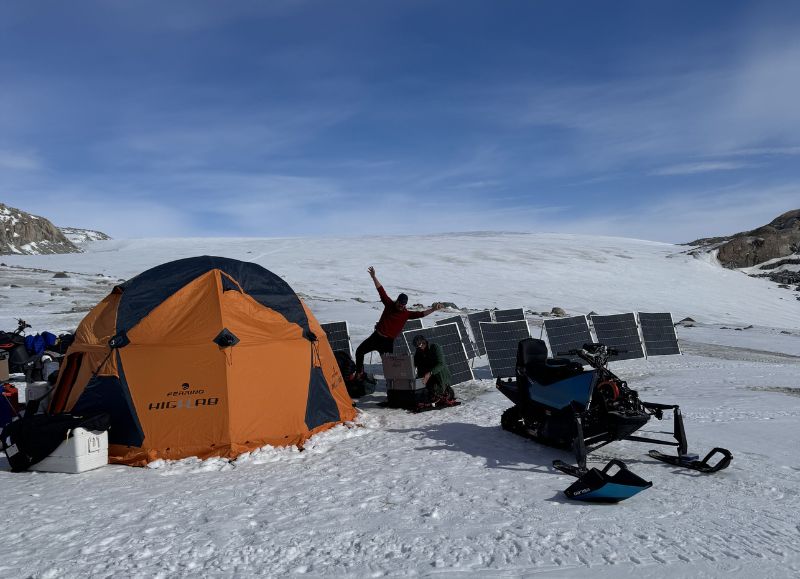
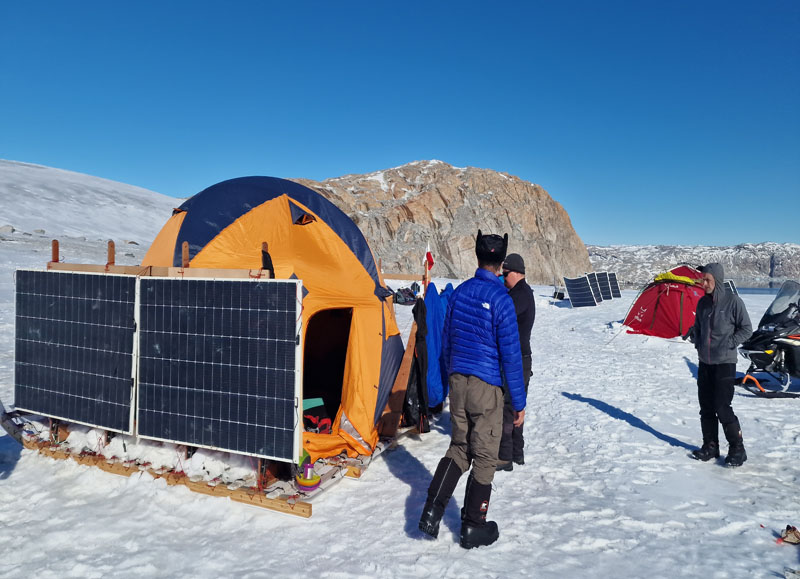
From April 16 to 29, 2025, the first expedition of the TransGreenland Electric Challenge took place on the Greenland Ice Cap, marking the first attempt to cross this environment using an electric snowmobile powered solely by solar energy.
The expedition was led by Ramón Larramendi, together with a multidisciplinary team of technical experts, Greenlandic logistics personnel, filmmakers, and experienced polar explorers.
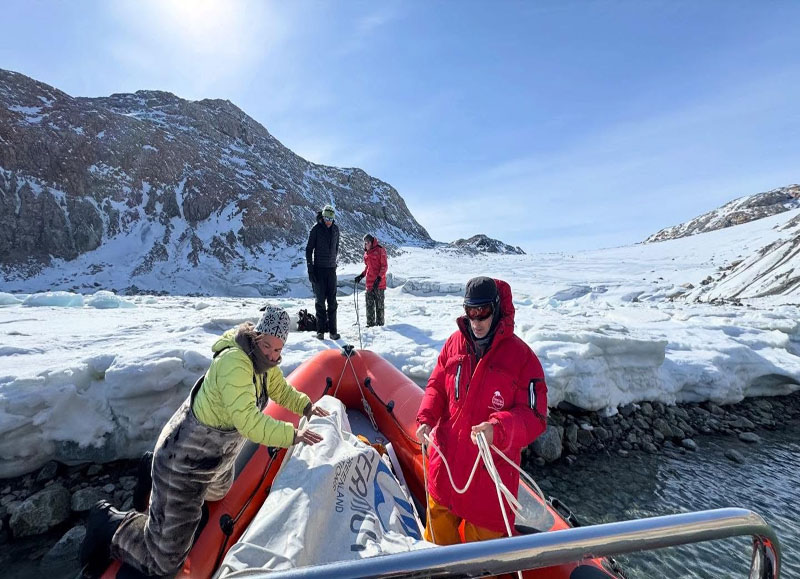
The team departed from Narsaq on April 16 and reached the Ice Cap after an 85 km ascent to 1,600 meters of altitude, where they also discovered a previously unmapped nunatak, later named “Aka Nunatak.”
After a preparation phase and solar charging period, the expedition began on April 23. Over the following days, the electric snowmobile covered 195 km across the Ice Cap, carrying up to 180 kg of equipment in the initial stages and later operating without cargo to test full performance capacity.
The expedition was divided into two phases:
- With cargo: 38 km, 22 km, and 25 km
- Without cargo: 55 km, 45 km, and 10 km
Throughout the journey, the team tested the solar recharging system, achieving daily energy inputs of up to 10 kW, enhanced by the reflective conditions of the snow surface.
A major storm buried the camp under nearly one meter of snow, testing the team’s resilience and operational capacity in extreme conditions.
The expedition concluded on April 29 in Narsaq, providing key technical and operational data on the use of electric mobility in polar environments.
2026 Expedition – Technical Testing and System Development
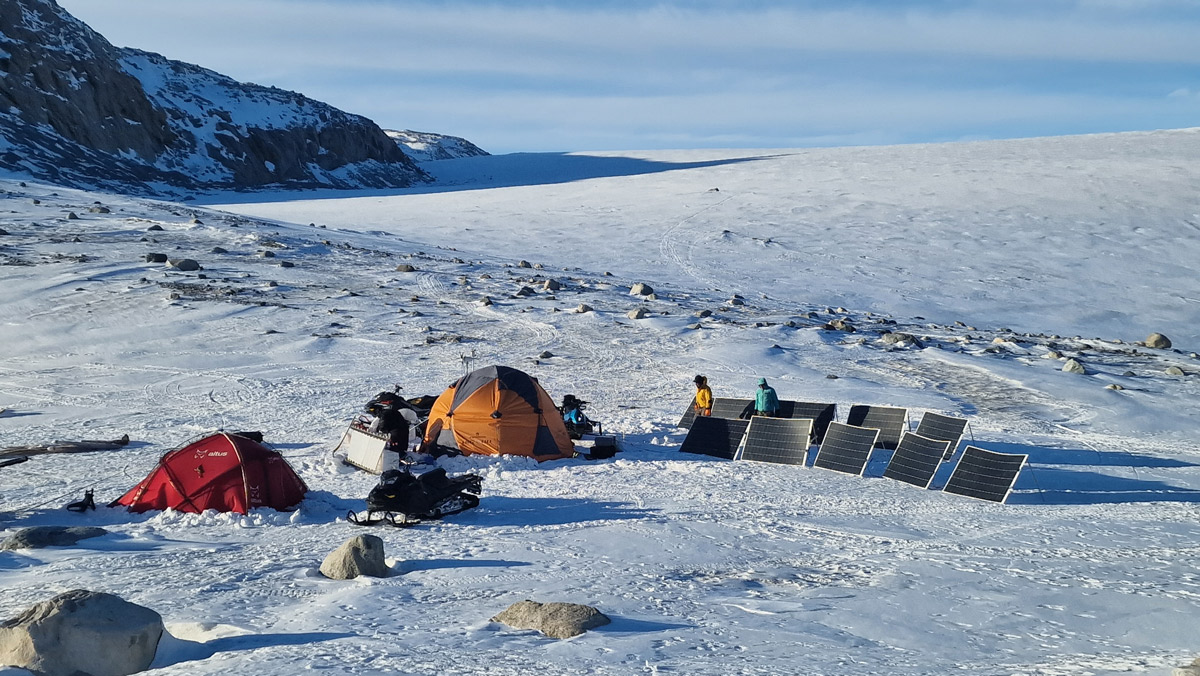
From April 14 to 21, 2026, the second expedition of the TransGreenland Electric Challenge took place in the Qaleraliq area, on the margins of the Greenland Ice Cap.
This phase focused on advancing the testing of the electric snowmobile system under real polar conditions, with particular attention to load capacity, energy use, and overall operational performance.
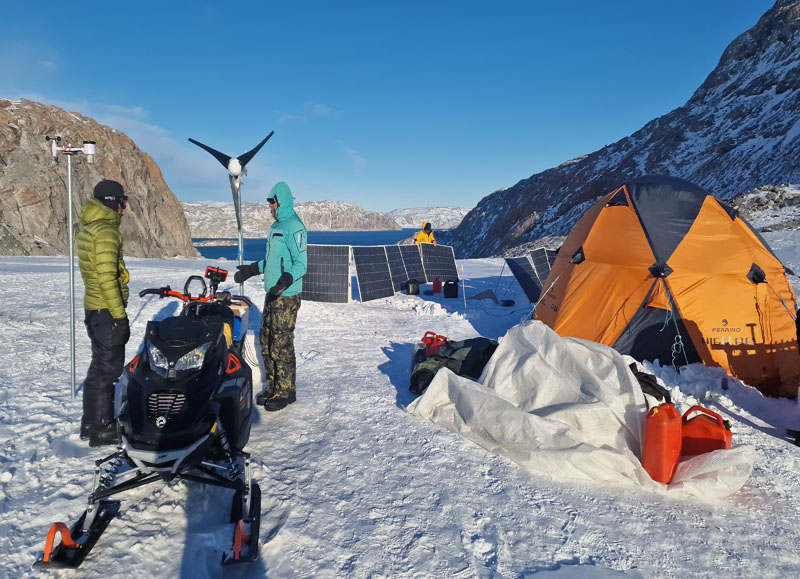
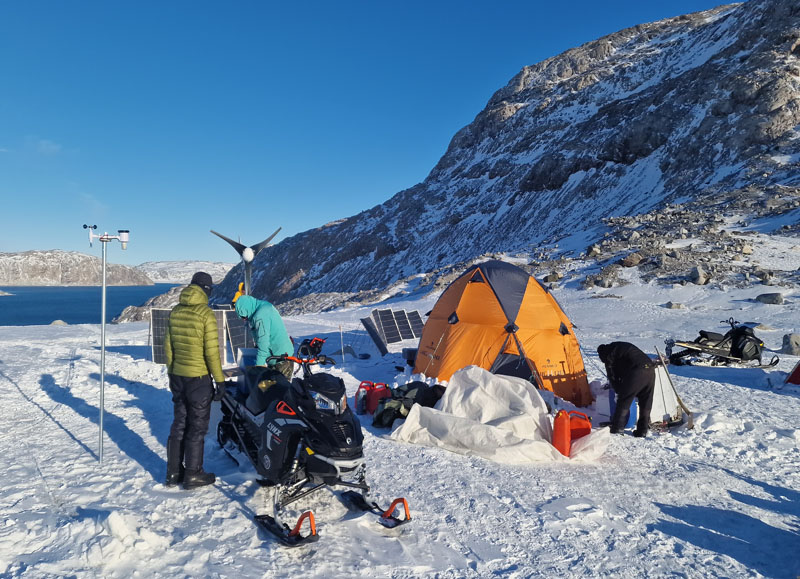
During the expedition, the team evaluated the efficiency of the energy generation system, combining solar panels and a wind generator. The system achieved an average production of around 15 kW per day, reaching up to 20 kW in clear conditions and approximately 8 kW on cloudy days, confirming the variability and potential of renewable energy sources in this environment.
The technical team was composed of Ramón Larramendi, project leader and experienced polar explorer; Aka Simonsen, Greenlandic guide specialist and key member of the Windsled team; J.J. Simonsen, Greenlandic logistics coordinator with extensive Arctic field experience; Juanma Viu, pilot and long-term expedition member involved in Windsled projects since 2001; Tomás Valles, electronics engineer whose contribution was essential to the development of the system; and Francesco Boncompagni, Greenland guide participating in his first expedition with the team.
Building on the initial field test carried out in 2025, this 2026 expedition served as a key step in refining the system’s performance, particularly in terms of energy generation, vehicle autonomy, and logistical application in polar conditions.
The next major challenge is planned for April 2027, with a long-distance traverse of approximately 500 km, reaching halfway to Nuuk (around Paamiut) and returning. This next phase will further test the endurance, autonomy, and real operational potential of the system over extended distances in the Arctic.