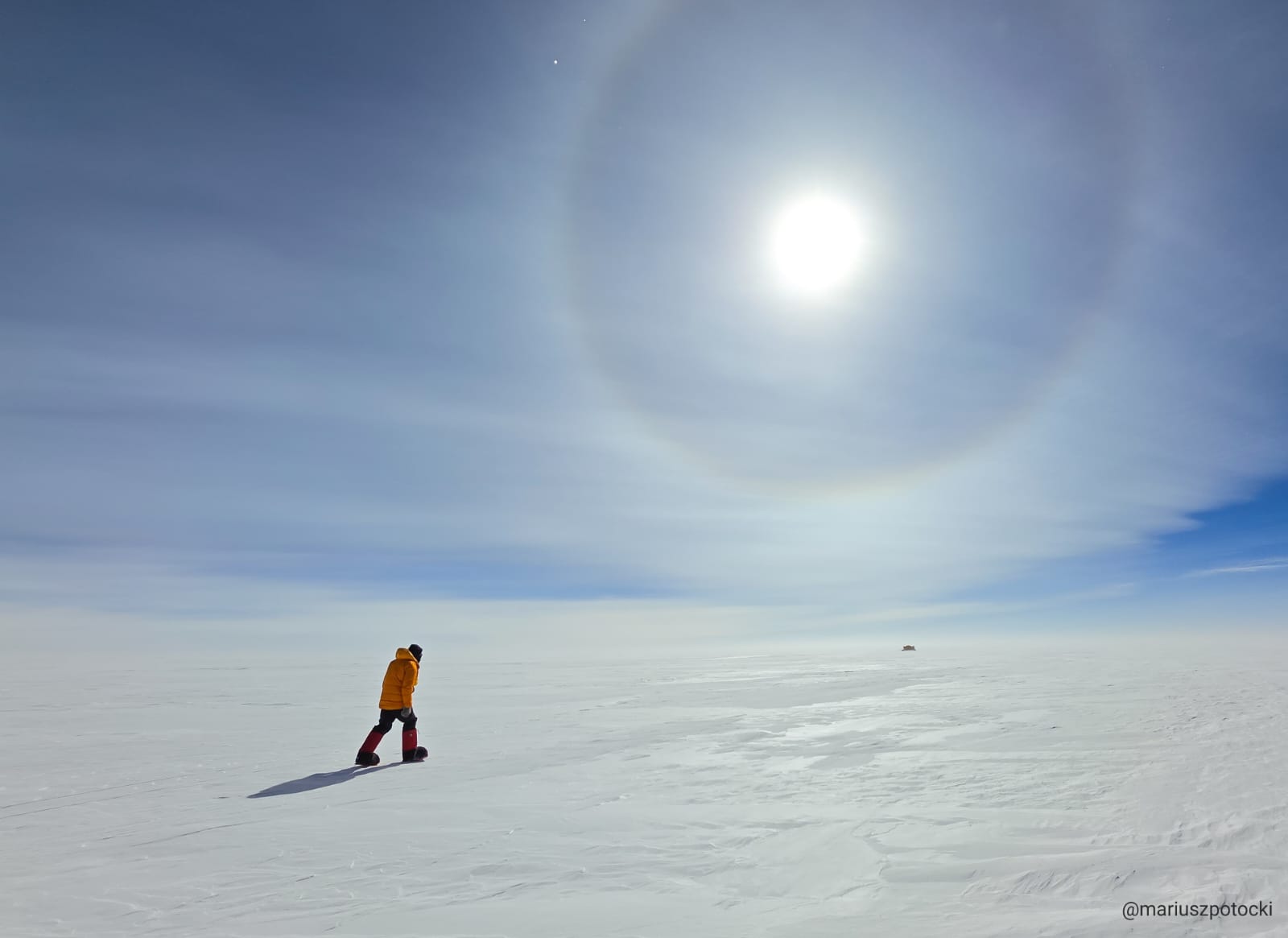
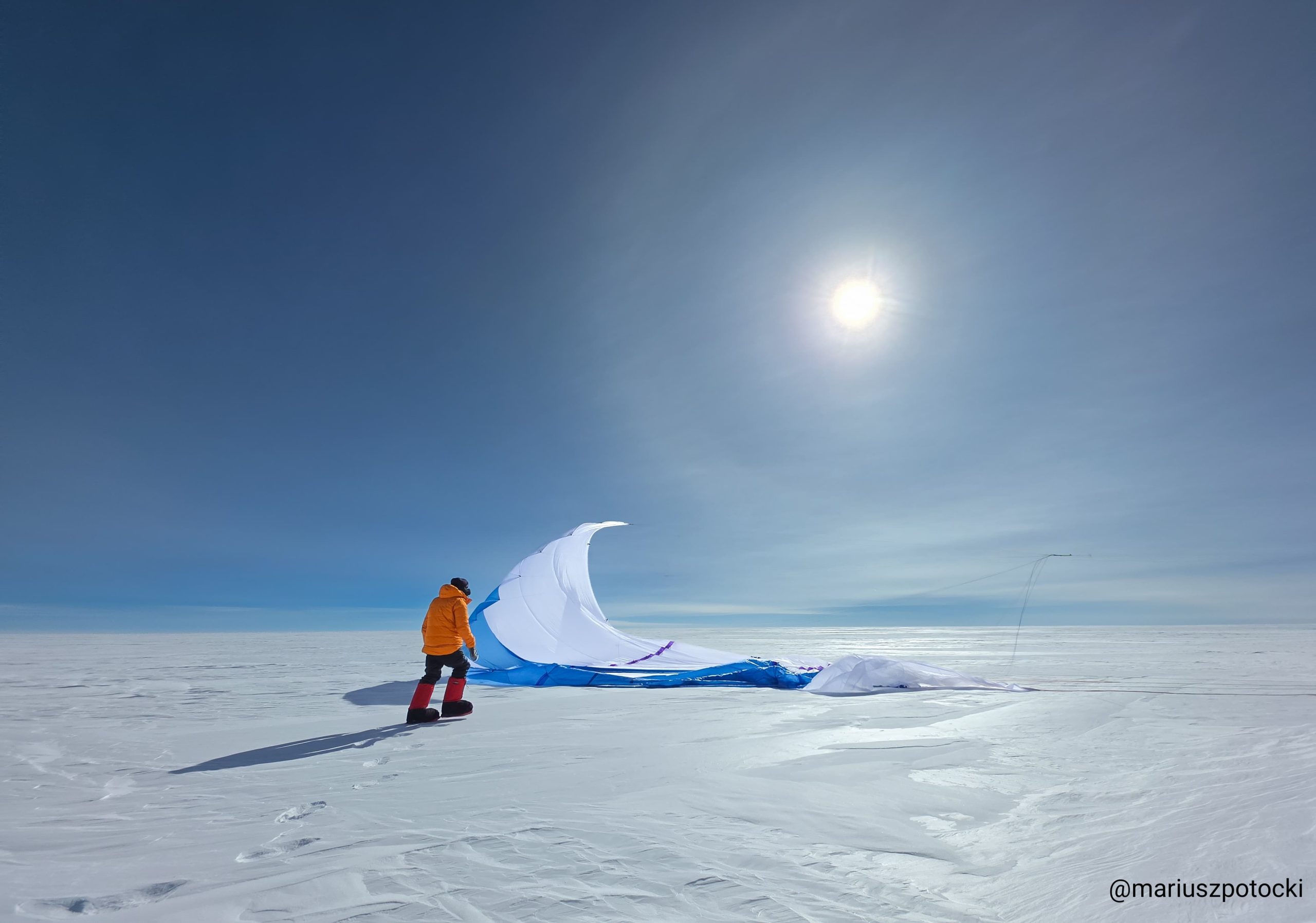
Since it began sailing across the ice, one week ago this Tuesday, the WindSled has covered around 260 kilometres at an average speed of 12 kilometres per hour. After overcoming the intense polar storms of the first days, it is now almost at the top of a dome (a large elevation in the ice), at an altitude of 3,370 metres above the Antarctic Plateau. “In the end, we got out of the ‘hole’ where we were heading west instead of east as planned, because the wind was not favourable for our route. The good thing was that we quickly confirmed that the WindSled, with its 2,300 kilograms of weight, sails perfectly across Antarctica. We had carried out tests in Greenland, but it is a great satisfaction to see that the predictions have been confirmed with the modifications and improvements we have made to the design. This vehicle works perfectly,” explains expedition leader Ramón Larramendi, its creator.
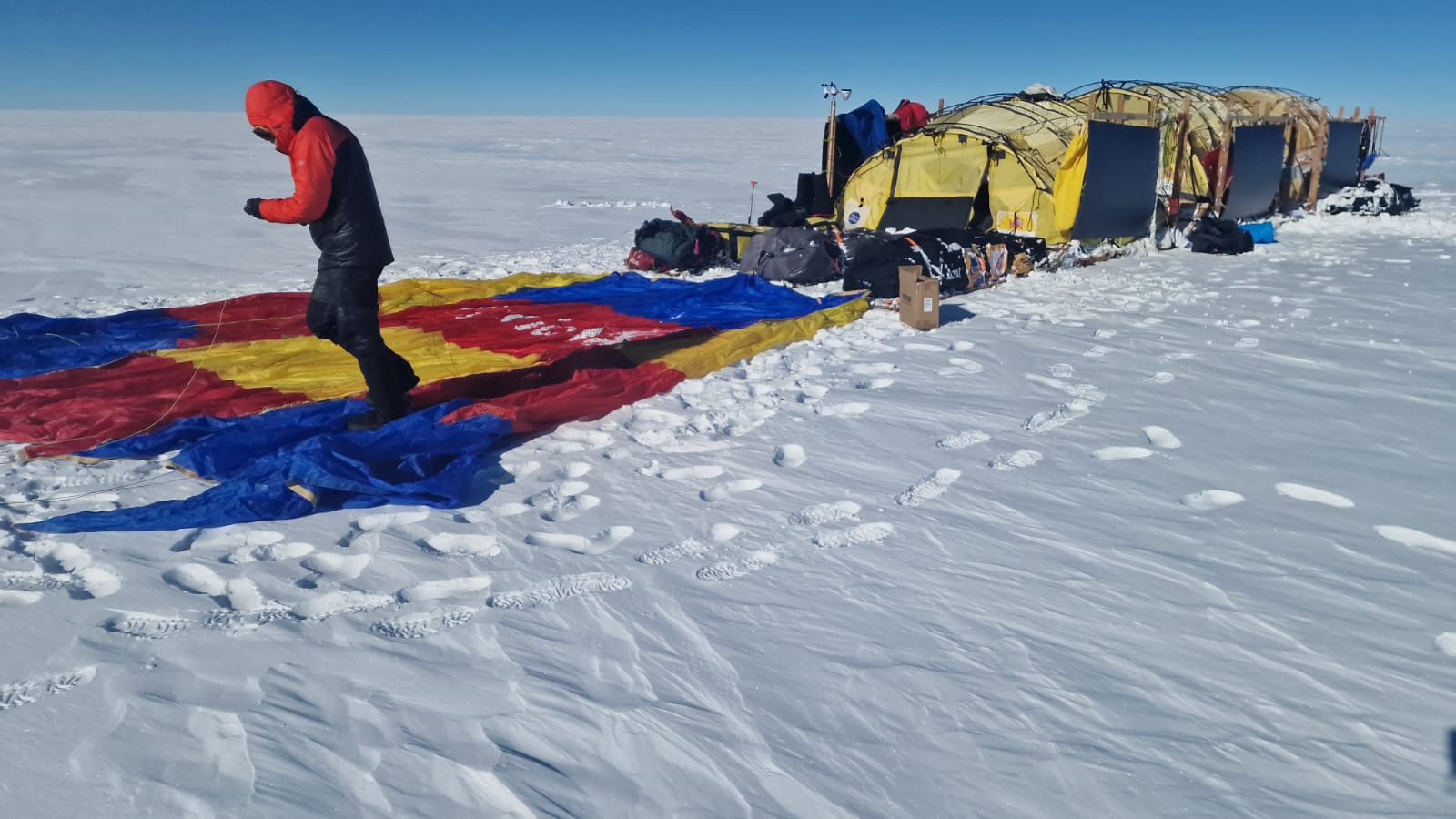
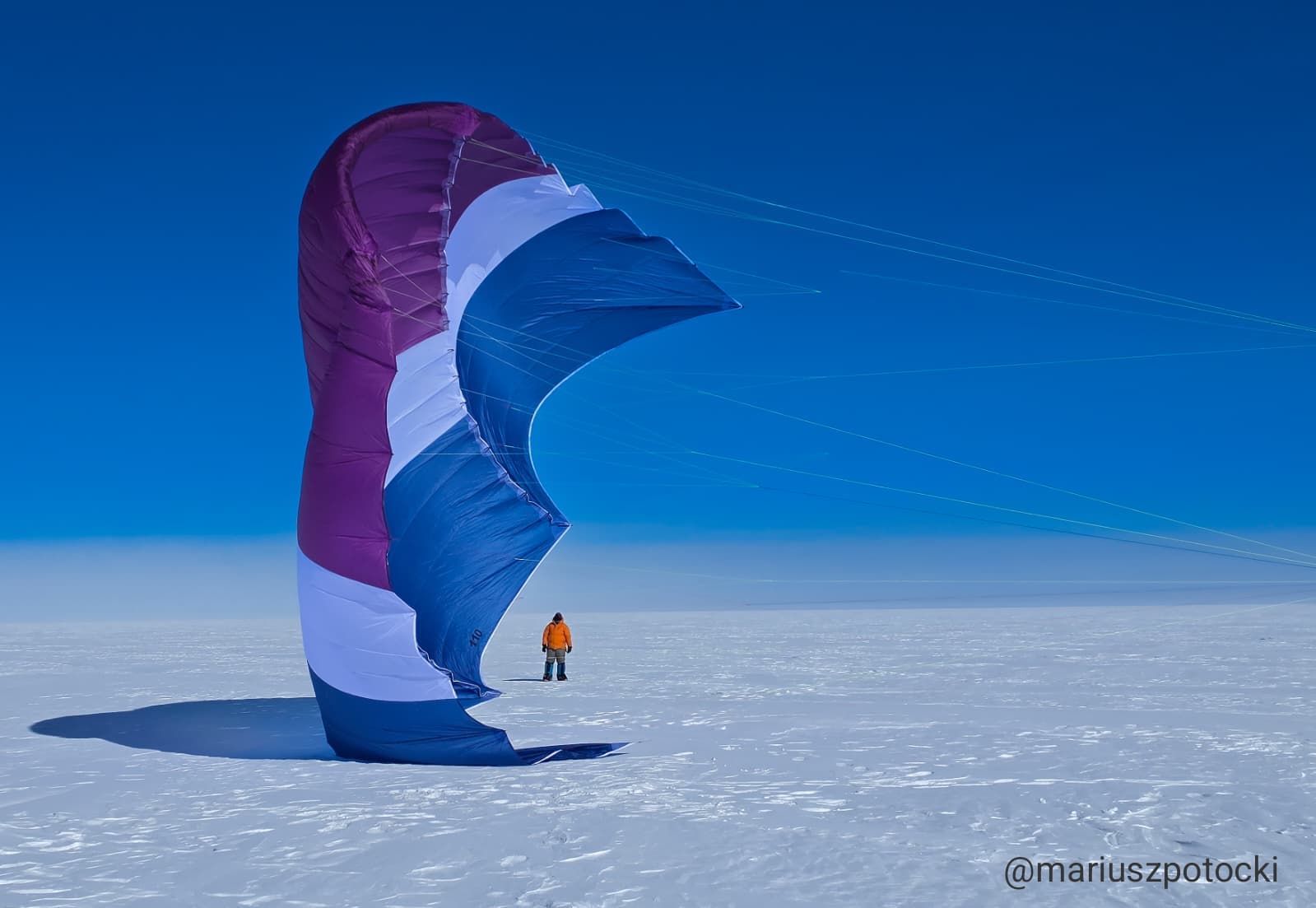
During the first two days, the convoy covered 80 kilometres in one day and another 55 kilometres the following day. The next day, Thursday the 19th, the wind was unfavourable, so after attempting to move with little success, they decided to dedicate the day to preparing and organising materials, food, carrying out small repairs, and other tasks. Last Friday, they finally completed a major stage of 120 kilometres in 10 continuous hours of sailing with the 60-square-metre kite, in the perfect direction for the planned route. They explain that they were almost sailing at the edge of the wind window, but although it was difficult, they managed to maintain a good course by adapting the kite’s position to the wind current that drives them, which that day reached around 30 km/h. “We have used kites of 60, 70 and 80 m². On the windless day we tested the 110 m² kite, but it did not move. In reality, we are climbing until we reach very close to the top of the dome. It was important to cross part of this elevation to take better advantage of the wind. Since the surface is good, without sastrugi (wind-generated snow ridges), the vehicle sails without difficulty,” explains the explorer.
However, he is aware that there are still days ahead with irregular energy supply from the wind: “We have to bear in mind that we are still in the area that is most unfavourable for us, because we know there are fewer days with favourable winds here. Although we left from a place that was worse than expected, we still have around 300 kilometres of unfavourable winds ahead, where we will have waiting days. But we expected this, we are on schedule, so we are doing very well,” he assures.
Proof of this was Saturday the 21st, when they were again unlucky: the wind was not only against them but also very weak, making it impossible to move the convoy. They decided to stop and dedicate the day to their intensive scientific work. The same happened on Sunday, the 22nd. Although they tried to set off with a 150-square-metre kite, they were unsuccessful. They only managed to advance seven kilometres during the attempt.
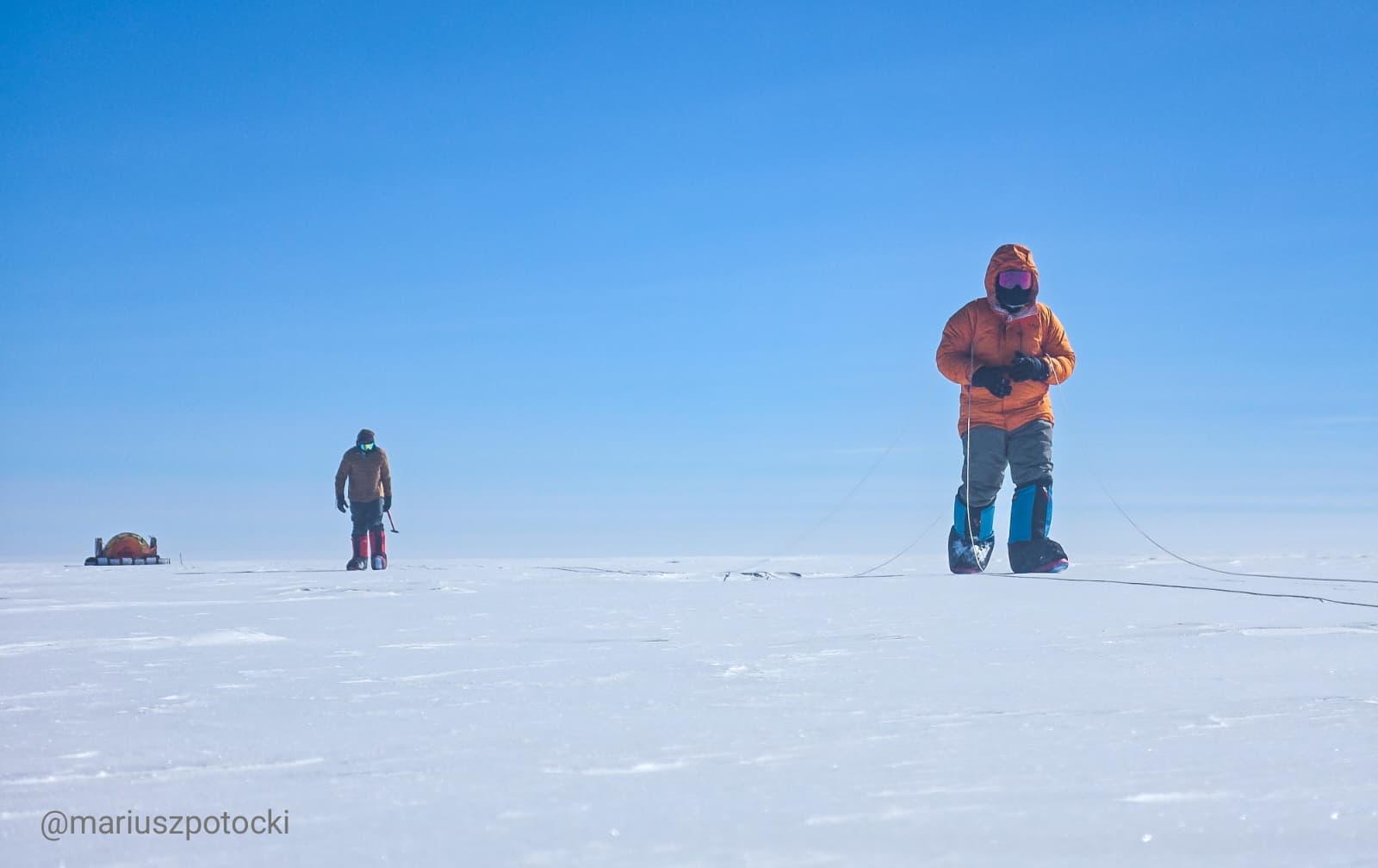
But these stops do not mean inactivity. Hilo Moreno has already activated the vast majority of the 16 scientific projects on board. “We have continued collecting air samples for two projects, Mariusz Potocki has carried out snow sampling to determine the presence of PFAS (persistent organic pollutants) and heavy metals. We have also activated the magnetometer and carried out measurements of the polar atmosphere using satellite signals, as well as monitoring the physical conditions inside and outside the tent, among other projects,” explains Moreno. He coordinates this scientific work, with the support of University of Maine scientist Potocki, who has proven to be a good pilot despite never having operated anything similar to the WindSled before.
Regarding the weather, conditions have improved since the beginning. They now have 24 hours of sunlight, so temperatures are higher than when they arrived, averaging around –35°C. As their weather stations have been damaged by the cold, they do not know the exact minimum temperatures below –40°C. But one thing is clear: a medical emergency in such a remote location would be a serious problem, so they take precautions to avoid frostbite. Having a heated tent, their home for the coming months, thanks to the solar panels, is a major help in preventing them.