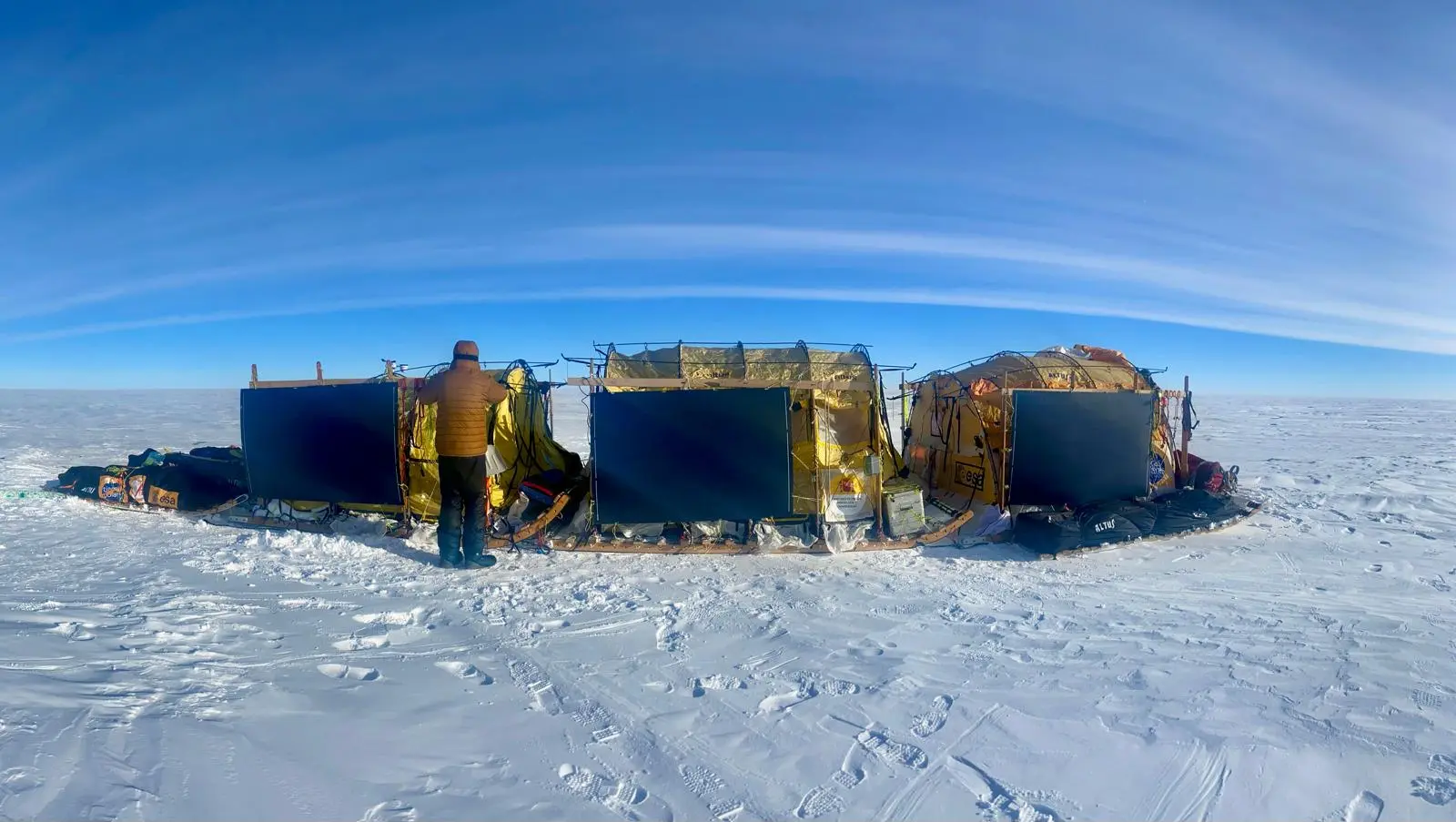
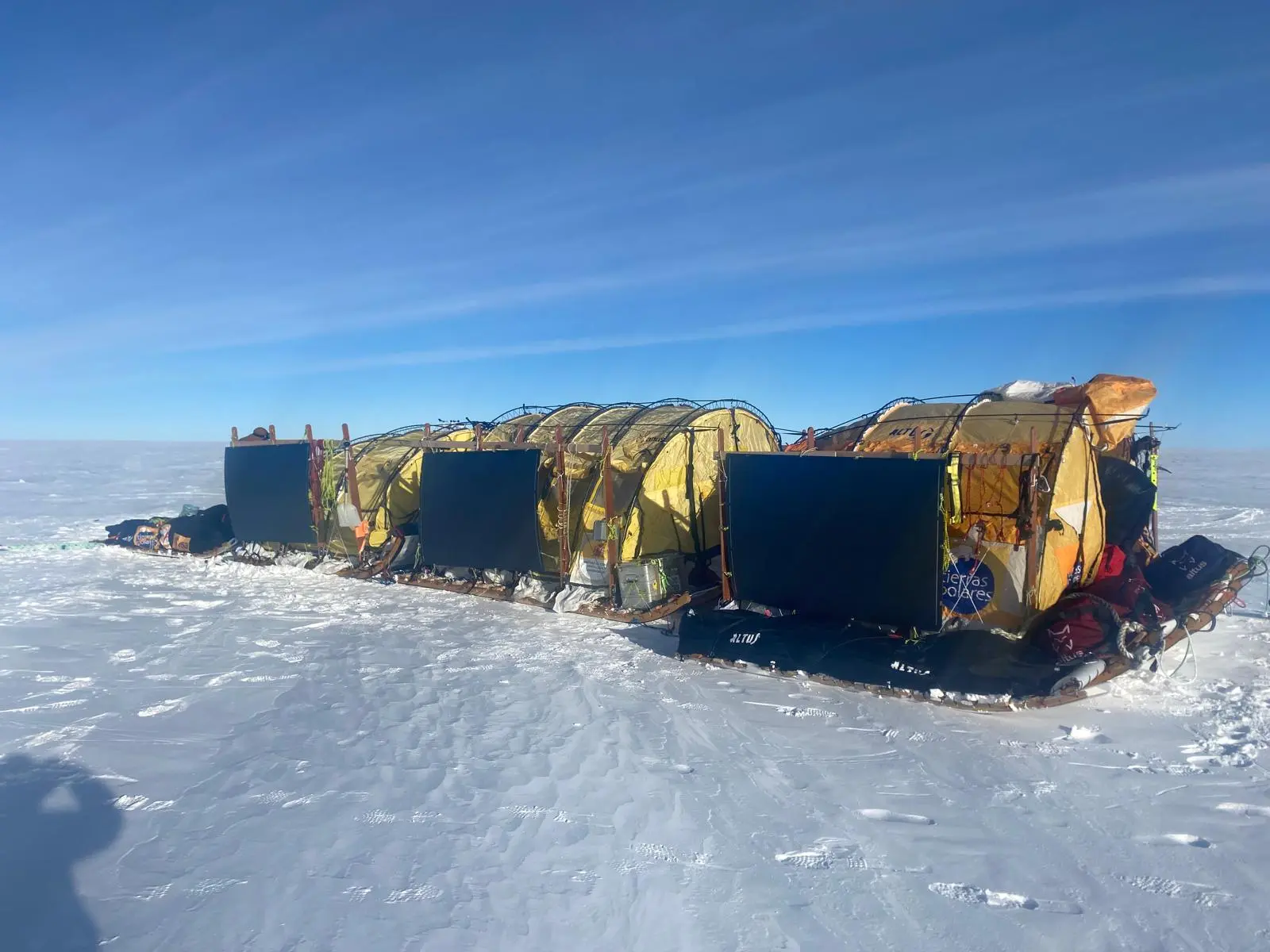
Celebrating a 61st birthday in the middle of the Antarctic Plateau. That has been the highlight of the day. It was Ramón Larramendi’s birthday, right here in the middle of the frozen wilderness. There was a birthday cake and a toast with Hilo Moreno, Javier Selva and Mariusz Potocki. But it was no holiday—we haven’t stopped working for a single moment. We have been fully focused on organising the Windsled, here at –35°C during the day and below –50°C at night. In fact, we no longer know the exact temperature because the thermometer stops working below that point. But we are doing well. We are not cold. The tent where we live is heated thanks to the photovoltaic solar panels we carry with us. Javier even says he’s too warm! Solar energy has improved enormously since our first expeditions using it.
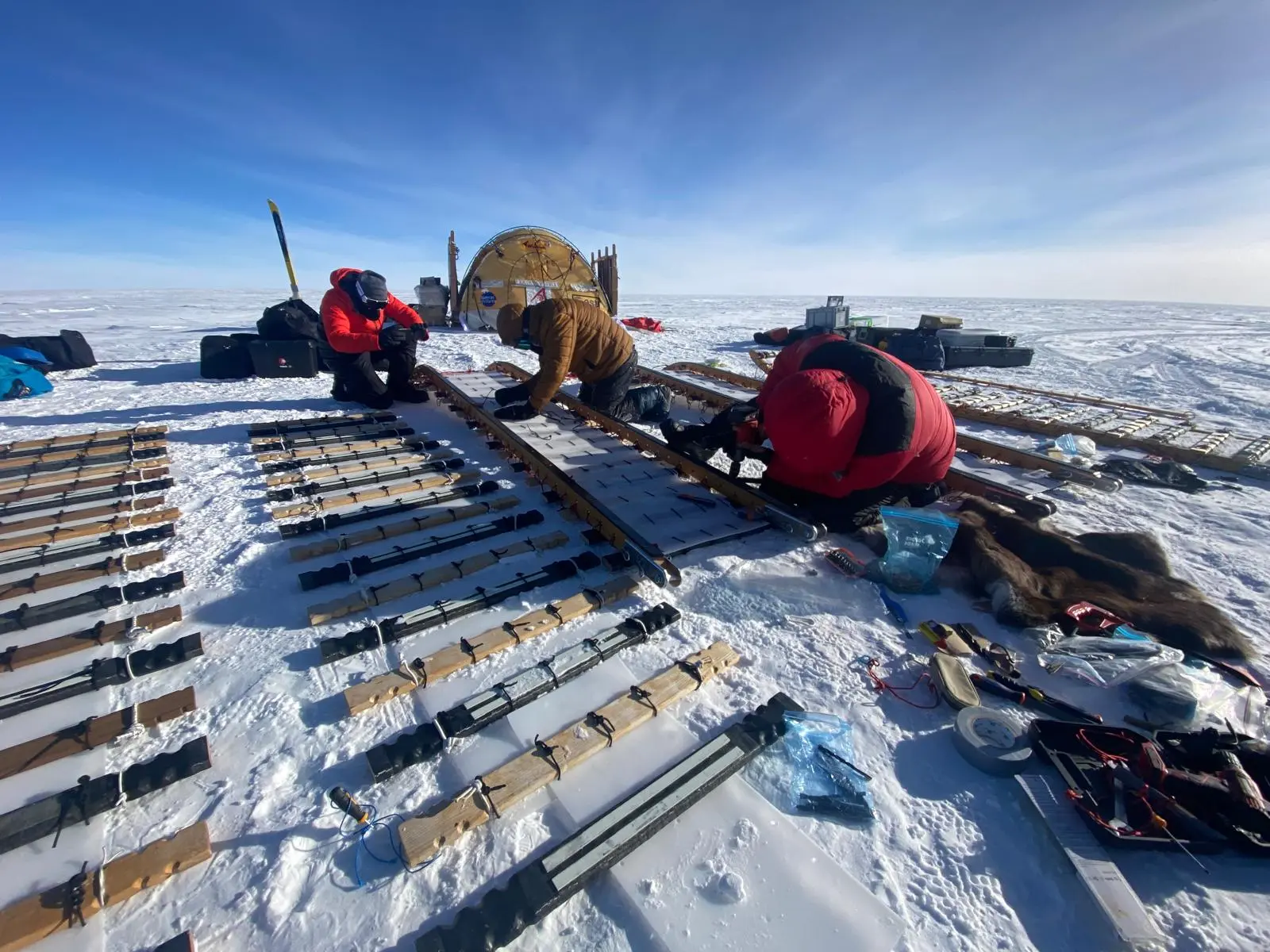
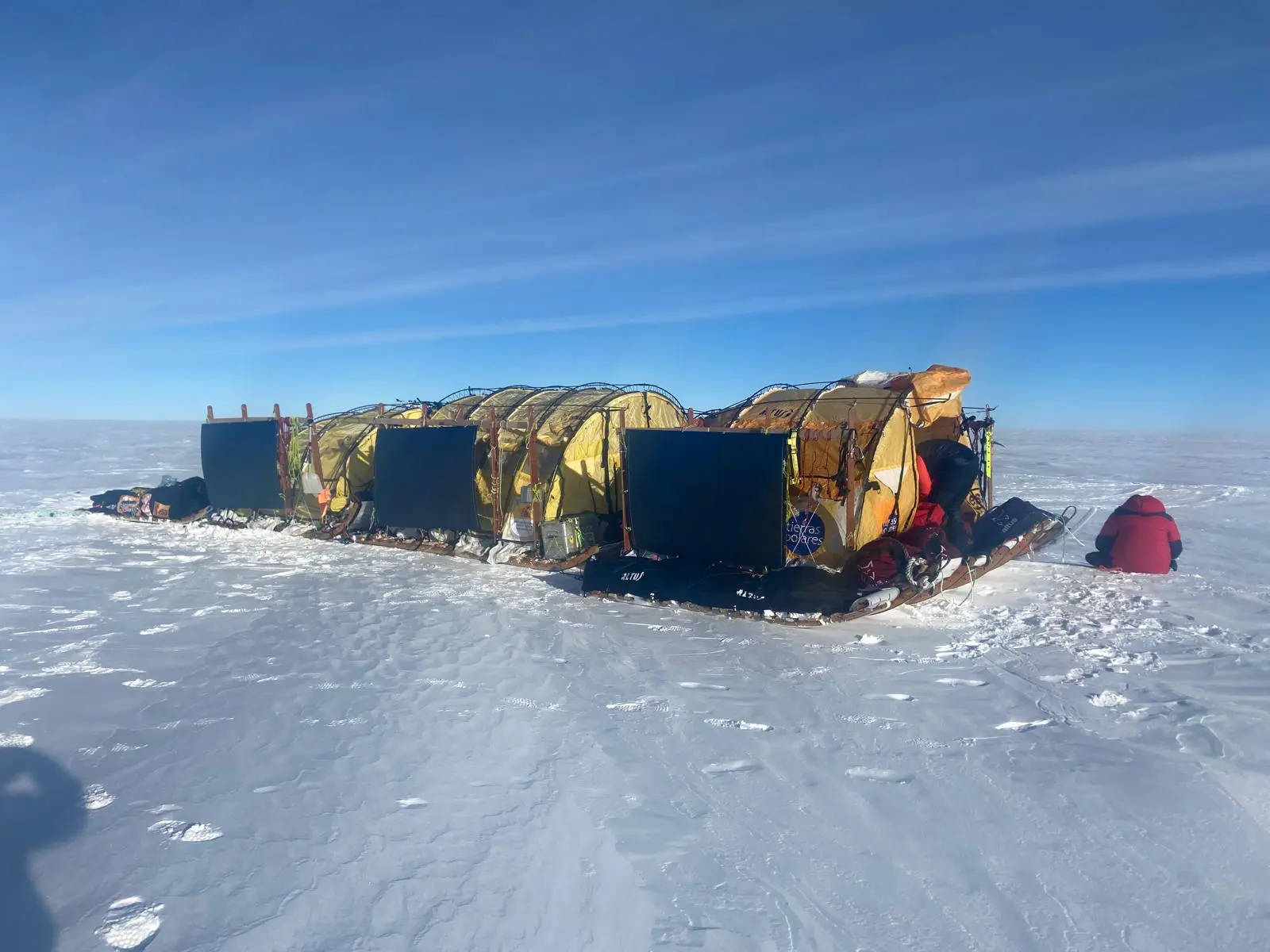
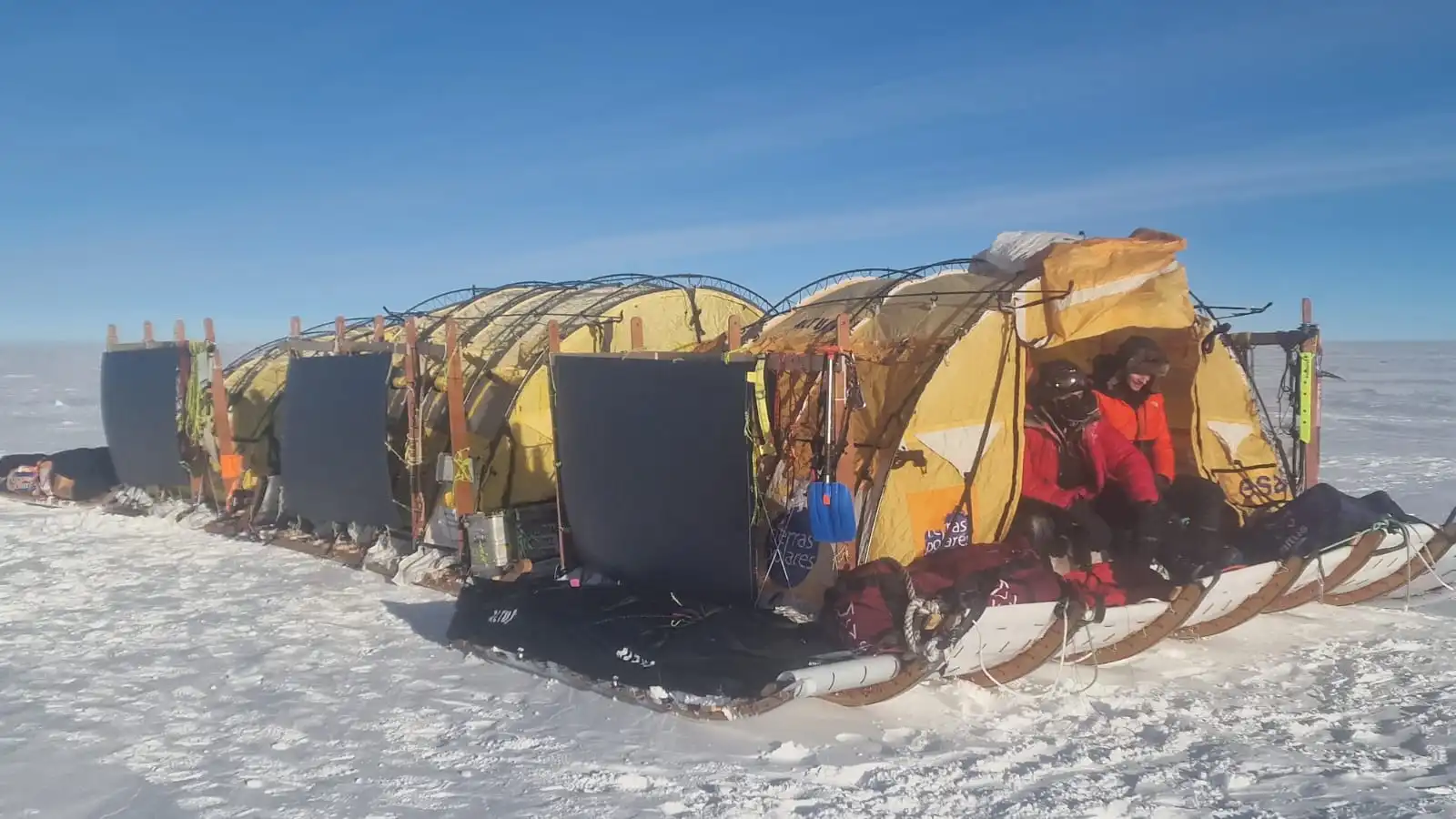
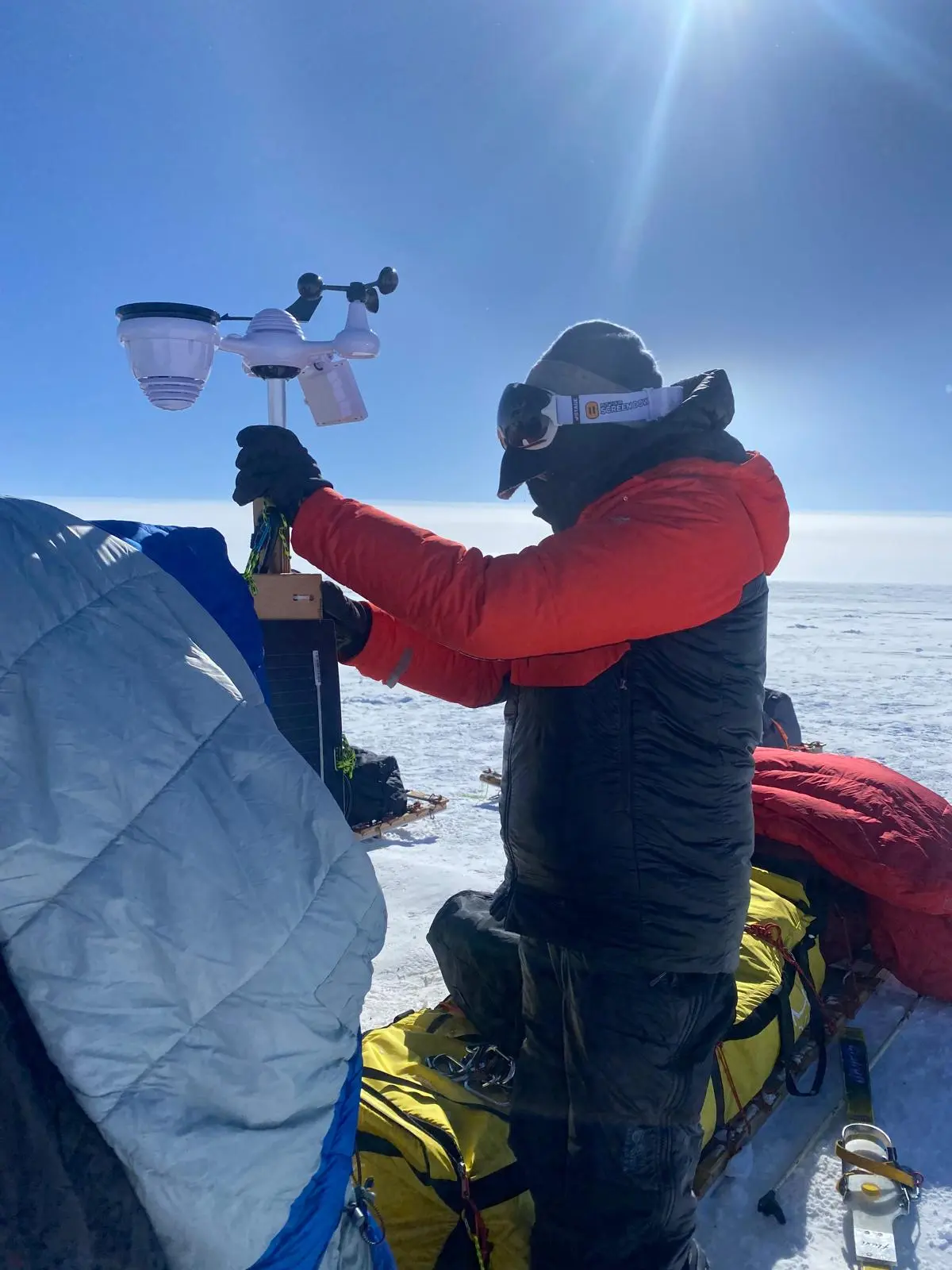
Yesterday we finally completed the full assembly of the Windsled. With its four modules, it is an impressive sight. It has taken several days, but it is now ready. Hilo has put a great deal of effort into the “laboratory module.” All the scientific instruments we are carrying are now installed inside. Some have been mounted outside, as they will collect data while we travel. Everything has been securely fastened so it can withstand the jolts of the sled as it crosses an ice surface covered with wind-shaped ridges and grooves. Some of these formations are a metre high or even more. It is a source of pride to see everything in place—so much science ready to be carried out. Once the researchers analyse everything we collect, we will discover whether a place that appears completely empty actually contains microplastics, chemical compounds, viruses and other microorganisms. Mariusz also has his equipment ready to begin collecting snow cores.
We are often asked about living together in such isolation. Choosing the right companions is essential on an expedition that lasts several months. In fact, one of the scientific projects focuses on us: researchers will study how the journey affects us, both physically and psychologically.
But we couldn’t have a better team. Javier Selva, an experienced explorer with the soul of a poet and an unbreakable spirit in the face of adversity, handles the Windsled as skilfully as he handles a camera. Hilo Moreno has spent many years as a key member of Spain’s Juan Carlos I Antarctic Station, where he is also one of its most experienced field guides—they will surely miss him during this Antarctic season—and he has already shared several Windsled expeditions with us. Mariusz, the one the rest of us knew the least, has integrated perfectly into the team, even though we naturally tend to speak more Spanish than English. He brings the scientific expertise that is so important for this expedition and is excellent company as well. And then there is Larramendi, the driving force behind both the project and the expedition, the person who knows this environment better than anyone else and who is capable of overcoming any setback with what seems like inexhaustible energy, inspiring the rest of the team. He is finally seeing his dream come true: that his zero-emission vehicle can serve humanity through science.
The plan is to begin sailing now, but very slowly, while testing every part of the convoy. It is very similar to the configuration we used in Greenland in 2024. We are currently in an area where wind conditions are not favourable, worse than expected because of the location on the plateau where the Russian convoy left us. We will have to leave this area at low speed because we are carrying a very heavy load—around 2,300 kilograms, somewhat more than originally planned.
But the adventure has finally begun!