
2014 – 1st GREENLAND CIRCUMNAVIGATION
One of the most ambitious polar journeys ever undertaken in Greenland took place on May,2014. The team completed the first circumnavigation of the Greenland Ice Cap, covering 4,300 km in 49 days aboard the WindSled and setting a new distance record of 427 km in a single stage.
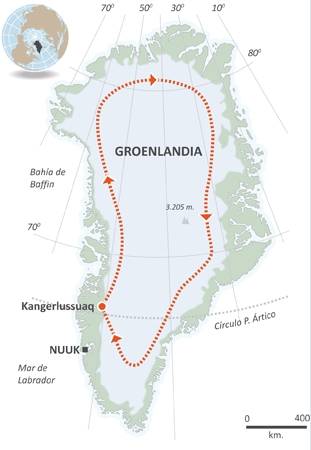
On May 6, 2014, polar explorer Ramón Larramendi and his team carried out one of the most ambitious expeditions ever undertaken in Greenland, the world’s largest island and still one of the least explored regions on Earth. The journey pushed the limits of polar travel by completing the first circumnavigation of the Greenland Ice Cap, a route that had never before been achieved through the central ice sheet. During the expedition, the team also set a new distance record, covering 427 km in a single stage.
The objective was to complete a circular route across the Greenland ice sheet (Inlandsis) aboard the WindSled, covering 4,300 km. The expedition sought to demonstrate the capabilities of the WindSled as a unique zero-emission “polar mobile laboratory”, capable of supporting both exploration and scientific research over long distances.
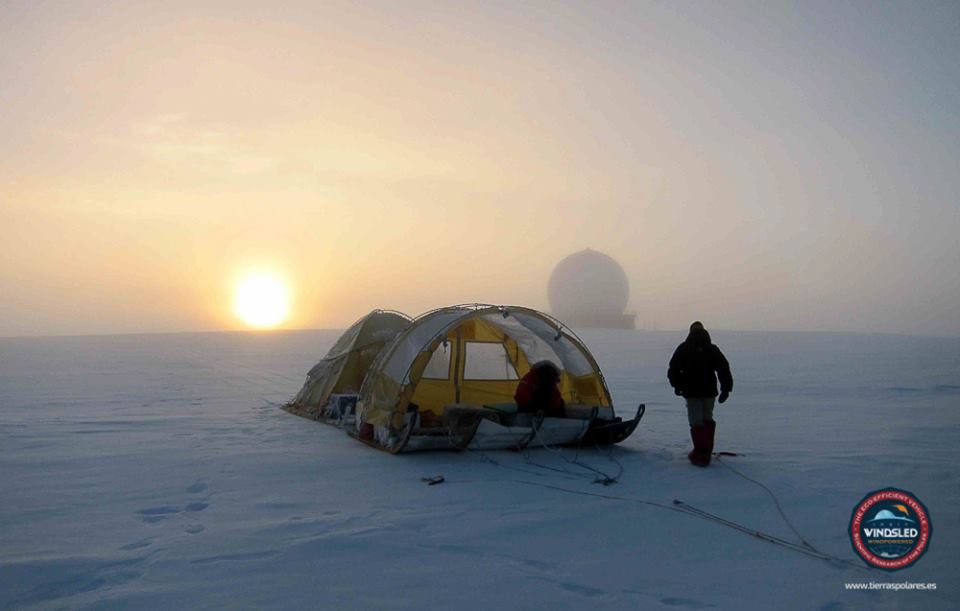
This pioneering route tested the vehicle under highly variable conditions, particularly changing and often unfavorable winds, which contributed to improving navigation techniques developed in previous expeditions. The team operated in continuous daylight conditions during May and June, taking advantage of nearly 24 hours of sunlight by rotating piloting shifts to maximize daily progress throughout the 49-day expedition. )
Scientific work was also an important component of the expedition. The team collected snow and ice samples to analyze their structure and pollution levels. These samples were later used by Spanish research teams to study climate change patterns (Pyrenean Institute of Ecology- (IPE-CSIC) )
The route began near Kangerlussuaq, on Greenland’s west coast, where the team was deployed onto the Ice Cap by helicopter. From there, they headed north to 80°N, before turning south and traversing the Ice Cap to 64°N. The expedition then completed the first circumnavigation of the Greenland Ice Cap, returning to its starting point near Kangerlussuaq. Along the way, the team visited the former DYE-3 radar station and passed close to Camp Century, the abandoned Cold War military base now buried beneath the Greenland ice sheet.
Over the course of the expedition, the WindSled incorporated and tested numerous technological innovations, reinforcing its development as one of the most efficient and sustainable polar transport systems. Operating in extreme conditions, with temperatures dropping to –30°C, the expedition combined exploration, technology, and science, further consolidating the WindSled as a pioneering platform for zero-emission polar research.
Windsled Structure
The WindSled Project has incorporated innovations as part of its basic design that makes it unique:
– It consists of independent units. Each has five wooden laminated maple rails (five sheets), with their corresponding traverses. The eighth prototype for The Greenland Circumnavigation 2014 consists of three modules: locomotive, solar and habitability. Overall, 9 meters (29 ft) long by 2.80 meters (9 ft) wide, divided in 5 reels and 180 traverses. The ninth prototype for The Antarctica Circumnavigation 2015 Expedition will utilize 300 traverses or crossbars.
– The entire structure is tied and secured with ropes, with a total of 360 knots. Thus the sled acquires exceptional strength and flexibility that allows it to adapt to uneven terrain, sastruguis and other ice formations. When excessive stress occurs damaging the ropes and even a bar, the distribution of strains allows the vehicle to keep on going as they are absorbed by these easily repairable ropes.
– The front ends of the rails on the first unit are higher to better address the impacts against sastruguis.
– In the storage boxes: food, kites, tools, parts… On these boxes the pilots are seated handling the kites by means of a windlass attached to a pulley system.
THE MODULES
– The 4 meter (13 ft) long locomotive module, is the place where pilots control the pulley lines of the WindSled’s kites. Thereon a transparent tent that prevents wind and gives comfort to the pilot(s) will be placed. Also, this space will have one of the two teams working when there is no wind, whilst the other one rests.
– The second module (the solar or loading module) will be allocated for food, scientific instrumentation, sample collection and solar panels for power supply.
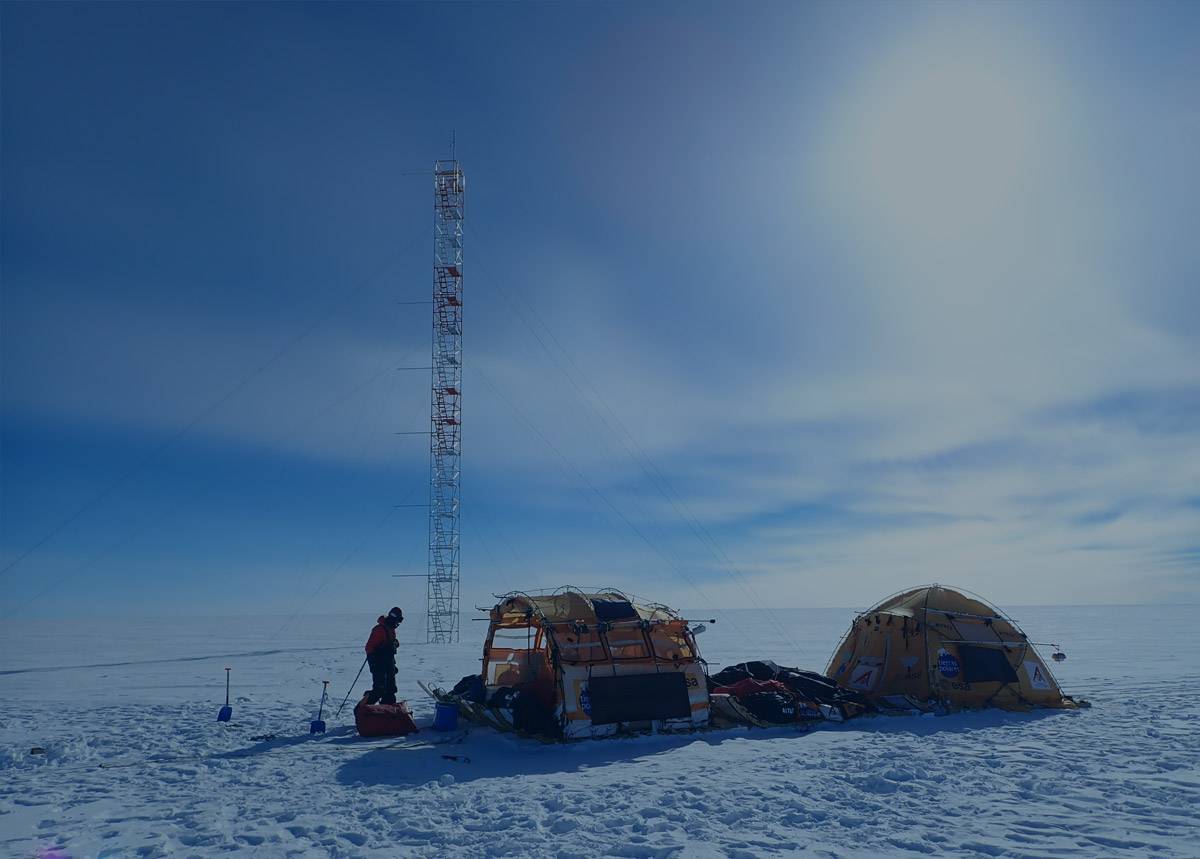
– The habitability or living module places a tent which includes personal baggage, provisions, cooking utensils and equipment for sleeping, eating or working. The tent articulates and flexes together with the sled when navigating. It includes a system of standing rigid aluminium rods when the wind exceeds 70 km (43 mi.) / h which gives the versatility to withstand strong storms and surf fields of sastruguis. The windows permit sunlight to penetrate through them allowing a greenhouse effect that will heat it up all day. This module is 2 meters (6 ft) long.
THE MATERIALS
The WindSled weighs approximately 500 kg (1102 lbs) but carries a total of 1400 kg (3086 lbs) of weight. It increases the number of rungs to 180, the crew members to five and transports scientific samples.
The new prototypes will use lighter materials for travel to be guaranteed with very little wind. In effect, The Greenland Circumnavigation 2014 Expedition will experiment with a new front line ‘impact’ transom made from fibreglass that ensures flexibility and endurance.
The mid term objective would be to carry six people (four crew members and two scientists) and up to 1700 kg (3747 lbs) of weight.
THE KITES
The WindSled functions with 15 NTW5 kites which are between 5 and 80 square meters (53.81 and 861.11 sq ft). They have been designed for this project by Juan Lupión, expert involved in the project since its inception. The kites, sewn at his workshop, are linked to the sled by four types of lines 150, 300 and 500 meters (492, 984 and 1640 ft) in length, used depending on the strength and direction of the wind in altitude. They all wear Kevlar reinforcements, which Mr. Lupión has incorporated to prevent breakage. In this new expedition, these models will experience new performance possibilities by enhancing the kite’s wind utilization.
Another element to upgrade is the pulley system with which the kites are handled. It will increase the diameter of the pulleys to reduce the physical effort of the pilots when “executing orders” to kites. In the future, an electrical motor powered by solar panels may be added.
Team

Ramón Larramendi
Project Leader
Spain, Greenland
Ramon H. Larramendis with no doubt one of the great polar explorers of the world and a pioneer in Greenland by excellency. At present, he operates Tasermiut South Greenland Expeditions, a tour and logistics provider. He was born in Madrid in the year 1965. From very young he was attracted by the adventure in polar areas, where he traveled for the first time at barely 20 years of age. He starred the Mapfre Circumpolar Expedition, in which he traveled 8,700 mi (14,000 km). In 1999 he began the WindSled Project, with which he has journeyed more than 12,427 mi (20,000 km) in the Arctic and Antarctica. He is the founder and director of the logistics and tour operator, Greenland Net. For the 2014 Greenland Circumnavigation Expedition aboard the WindSled, Ramon Larramendi is the organizer, promoter and expedition leader
Karin Moe Bojsen
Civil Engineer
Denmark
Trained as a civil engineer by the University of Copenhagen, where she was born, her professional life has led her to reside for several years in Greenland, Norway and the UK, as well as in West Africa, Jamaica, Trinidad, Sri Lanka, among other places. She is currently working as a freelance engineer for Offshore Co., an aeolian energy enterprise. A job that allows Karin to have the flexibility and time to embark on adventures such as the 2014 Greenland Circumnavigation. In fact, she always uses her free time on expeditions, whether climbing, kayaking or skiing in diverse locations such as Norway, Greenland, Altai Mountains, the Andes or the Himalayas. The last few months she has remained in the Norwegian Arctic, training with the Huskies, dogs used for mushing and dogsledding
Manuel Olivera
Industrial Engineer
Denmark
A 52-year-old native of Madrid, Eusebio Beamonte is a civil engineer by training. He works as an instructor at an engineering training center and specializes in the strength of materials. He has participated in over 30 expeditions to some of the most inhospitable places on Earth, almost all of which involved high-altitude mountain environments. Beamonte has traveled to the North Pole with Ramón Larramendi, as well as to Antarctica, Patagonia, the Democratic Republic of the Congo, Borneo, Indonesia, and the Himalayas—the latter on several occasions. His most recent expedition before embarking on the circumnavigation of Greenland took place in February, when he and the renowned mountaineer Fernando Garrido reached the summit of Aconcagua, at an altitude of nearly 7,000 meters.
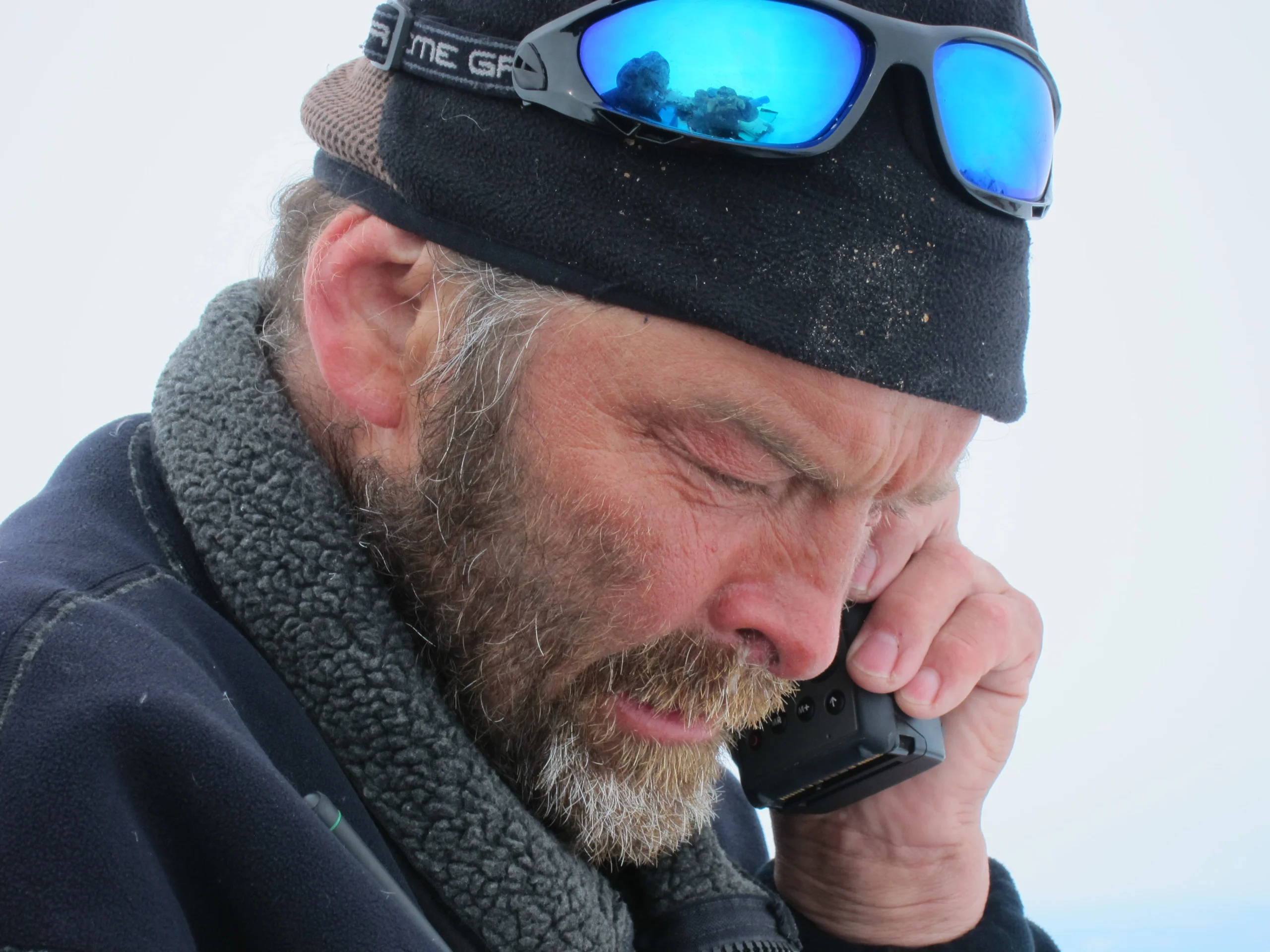
Hugo Svensson
Greenland
Born in Greenland, Hugo Svensson (Ilulissat, 1963) is currently the head of the fire service for Mittarfeqarfiit, the official body that manages operations at Greenland’s airports. Svensson is a well-known navigator in his home country. His presence on this expedition will bring valuable experience in quickly resolving any unforeseen issues that may arise.
Scientific Projects
Characterization of the Snow Mantle on the Inlandsis Glacier
Lead scientist: Dr. Juan Ignacio López Moreno
Institution(s): Pyrenean Institute of Ecology, IPE-CSIC
Snowpack measurements were carried out during the Greenland Circumnavigation to document snow depth, density and temperature across the ice sheet. The project helped characterize the spatial variability of surface snow conditions over a large inland transect and provided valuable field data from the central Greenland plateau.
Monitoring of Temperature and Relative Humidity for Greenland Climate Models
Lead scientist: Dr. Juan Ignacio López Moreno
Institution(s): Pyrenean Institute of Ecology, IPE-CSIC
Atmospheric observations of temperature and relative humidity were collected along the route to improve understanding of near-surface conditions over the ice sheet. These data contributed to the validation of snow and climate models for Greenland and complemented the broader snowpack survey undertaken during the expedition.
Measurement of Environmental Radioactivity
Institution(s): Inuit WindSled Project
Environmental radioactivity measurements were taken during the traverse as part of the scientific testing carried out on board WindSled. The objective was to explore the value of a renewable mobile platform for environmental observations in remote polar regions.
Seasonal Snow Depth Validation Using WindSled Data
Lead scientists: Dr. Hiroyuki Tsutsui, Dr. Takashi Maeda
Institution(s): Japan Aerospace Exploration Agency, JAXA
WindSled 2014 in situ snow observations were later used as reference data in a remote-sensing study published in 2017 on seasonal snow depth over the Greenland Ice Sheet. This is best understood as a later scientific use of WindSled field data rather than as a formal onboard collaboration during the 2014 expedition itself.



© 2026 WINDSLED|| COOKIE POLICY || PRIVACY POLICY
© 2026 WINDSLED|| COOKIE POLICY || PRIVACY POLICY