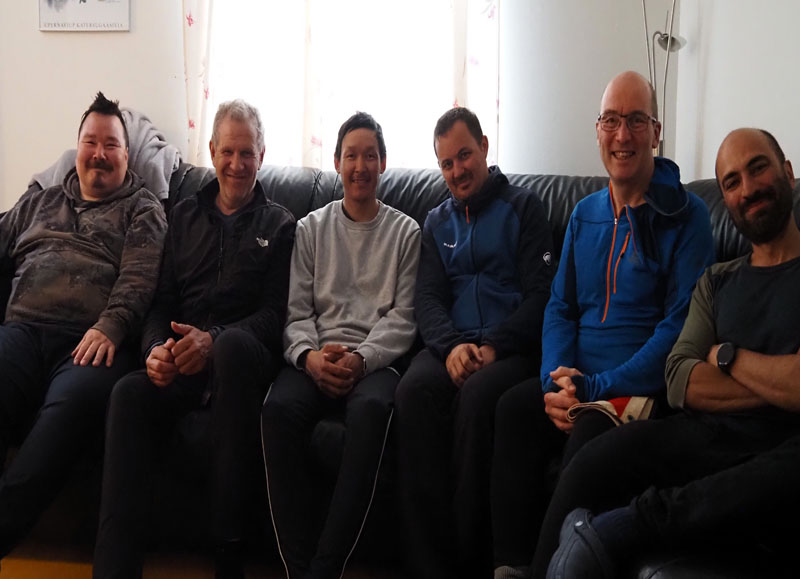
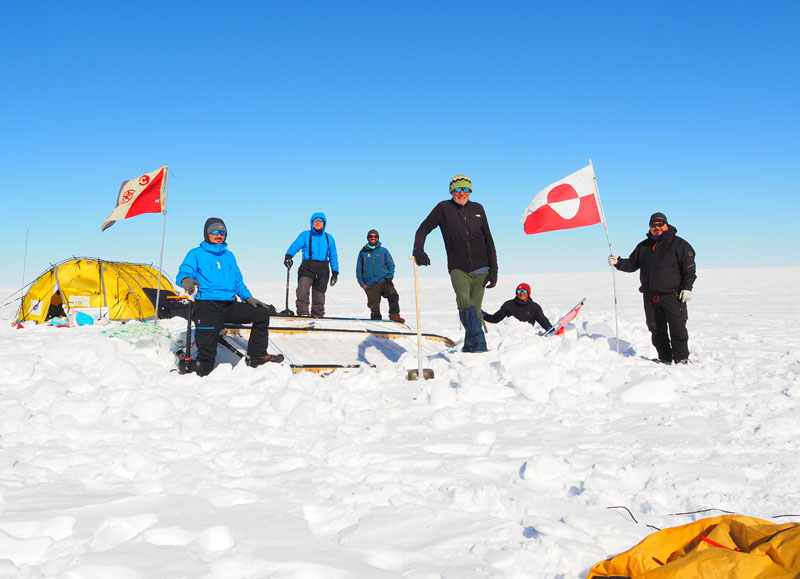
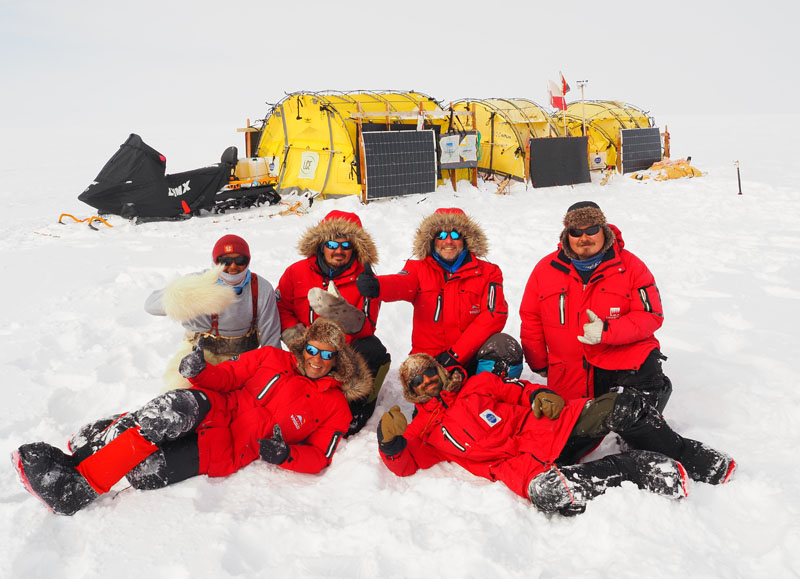
The North Greenland Windsled Expedition 2026 has successfully concluded after several weeks of operations on the Greenland Ice Cap. Led by polar explorer Ramón Larramendi, the international team included Antonio Mangia, Jens Jacob “JJ” Simonsen, Bendt-Poul Jensen, Clotaire Berthelot, and Patrick Peters.
The expedition combined exploration, logistics, technological testing, and scientific research. While challenging weather, deep snow conditions, and administrative delays forced the team to adapt its original plans, the expedition successfully achieved several major objectives and delivered valuable lessons for the future development of the Windsled project.
Step 1 – Reaching the Ice Without Helicopters
The first objective of the expedition was to prove that access to the Greenland Ice Cap could be achieved without relying on helicopters.
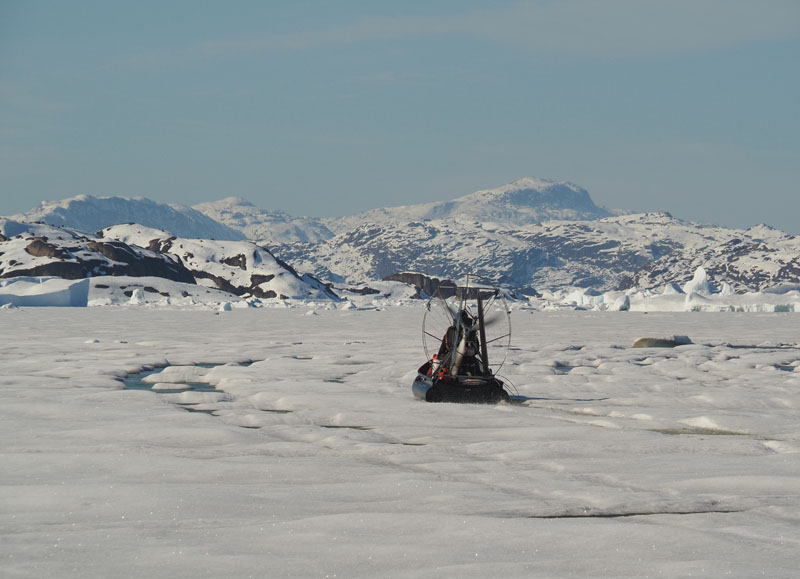
For the first time in Windsled history, the team successfully reached the sea ice using an experimental hydrocopter capable of operating both on open water and unstable sea ice. This innovative solution allowed the expedition to transport personnel and equipment to the edge of the Ice Cap while avoiding the high costs, logistical complexity, and environmental impact associated with helicopter operations.
This achievement represents a major breakthrough in the development of more sustainable and autonomous polar expeditions.
Step 2 – Opening a Safe Route to the Ice Cap
Once on the sea ice, the next challenge was to establish a safe route to the interior of the Greenland Ice Cap.
Using snowmobiles and a ground-penetrating radar operated by Clotaire Berthelot, the team carefully explored the glacier ascent. The georadar proved essential in detecting hidden crevasses and ensuring safe passage through potentially dangerous terrain.
After a demanding ascent, the expedition successfully reached the depot located at approximately 2,000 meters above sea level, validating a new access route to the Ice Cap.
However, operations were significantly affected by the long wait for final permits. Between May 11th and May 21st, the team remained at base camp awaiting authorization to proceed. These ten lost days, caused by administrative procedures and bureaucracy, would later play an important role in the strategic decisions made during the expedition.
Step 3 – Preparing and Testing the Heaviest Windsled Ever Built
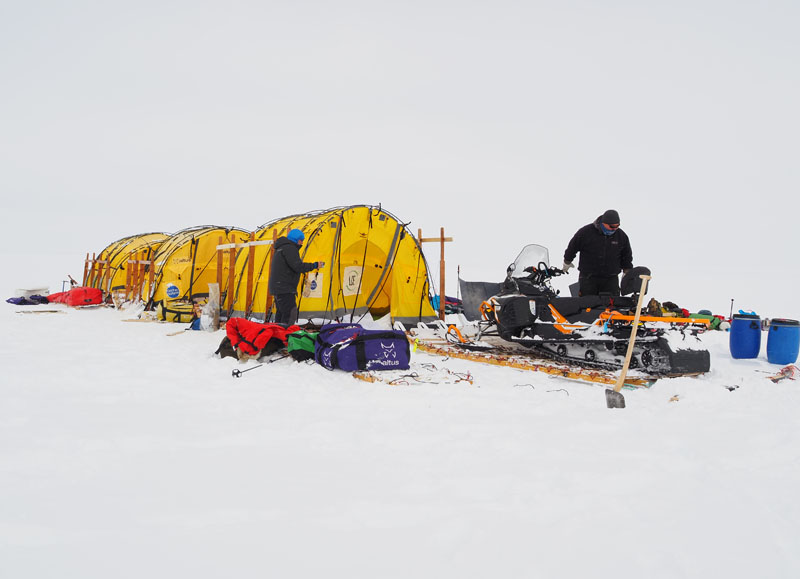
After reaching Windsled’s Camp and recovering the depot located at approximately 2,000 meters above sea level, the expedition entered its most demanding logistical phase: assembling and preparing the Windsled for the traverse.
One of the key objectives of the 2026 expedition was to test a fully autonomous operational model. Unlike previous expeditions, one of the snowmobiles would accompany the team throughout the journey as part of the payload, providing a potential self-rescue capability if required.
This decision transformed the logistics of the expedition. The Windsled was required to carry more weight than ever before, surpassing three tonnes of equipment, supplies, structures, fuel for the snowmobile, safety systems, and expedition gear.
During several days of intense work under strong winds, snowfall, and temperatures often below -15°C, the team assembled the four modules of the Windsled: the locomotive tent, cargo platform, sleeping module, and snowmobile sled.
Once assembly was completed, a series of navigation and towing tests confirmed that the vehicle was ready to begin the traverse. The expedition was now prepared to put both the Windsled and the new autonomous logistics concept to the test.
Step 4 – Reaching the Operational Limits of the Windsled
Another major objective was to repeat and further validate the route successfully opened during the 2025 expedition.
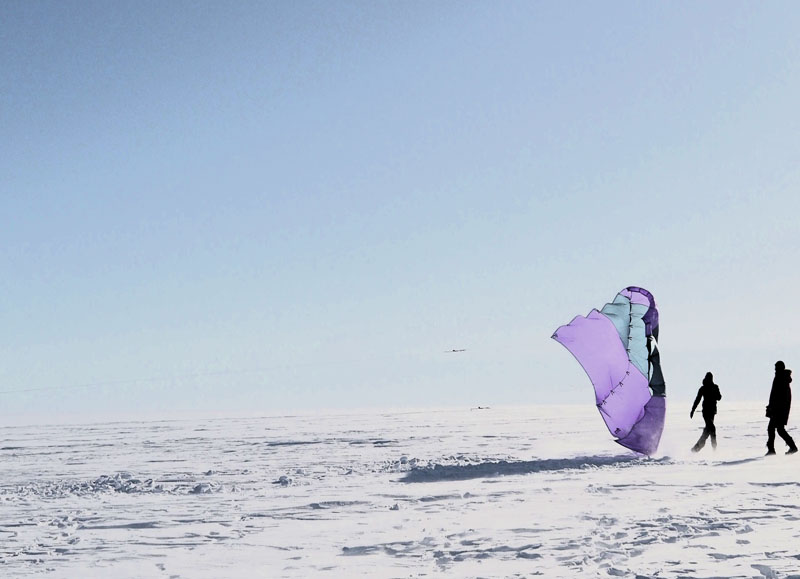
The traverse began, but conditions quickly proved exceptionally difficult. High temperatures softened the snow, creating deep and wet surfaces that dramatically increased resistance. At the same time, persistent winds pushed the Windsled northward while the team needed to travel east.
Despite the challenging weather, deep snow conditions, and the difficulties of hauling more than three tonnes across the Ice Cap, the expedition managed to cover approximately 150 kilometers.
The experience provided one of the most important results of the entire expedition: after more than two decades of development and continuous increases in carrying capacity, the team identified the current operational limits of the Windsled under extreme load and deep snow conditions.
Combined with the ten-day delay caused by permit issues and increasingly unfavorable weather forecasts, expedition leader Ramón Larramendi carefully evaluated the situation and decided not to continue repeating a route that had already been successfully opened during the 2025 expedition.
Instead, the team shifted its focus toward another key objective of the project: testing a fully autonomous self-rescue strategy and validating the capability of returning from the Ice Cap to Upernavik by their own means, opening and adapting a descent route under late-season melting conditions.
Step 5 – Autonomous Descent and Return to Upernavik
The final phase of the expedition focused on testing a fully autonomous self-rescue strategy from the Greenland Ice Cap.
Using the snowmobile carried throughout the expedition, the team began its return journey, opening and validating a new descent route from the Ice Cap to the coast. As conditions evolved with the advance of the season, the route had to be continuously adapted to ensure safe passage.
The descent was completed successfully, demonstrating the feasibility of autonomous evacuation and logistics in one of the most remote regions of Greenland. Once back on the coast, the team completed the final stage of the journey using the hydrocopter and successfully returned to Upernavik.
This achievement validated one of the expedition’s most important logistical objectives: proving that a Windsled expedition can access the Ice Cap, operate independently, and safely return by its own means without relying on external support.
Conclusions: A New Level of Autonomy for Polar Expeditions
Although one of the original traverse objective was modified, the North Greenland Windsled Expedition 2026 successfully achieved its most innovative logistical goals.
The expedition demonstrated that access to the Greenland Ice Cap can be achieved without helicopters, validated a new ascent route using georadar technology, tested the heaviest Windsled ever assembled, identified important operational limits for future development, and successfully completed a fully autonomous self-rescue operation from the Ice Cap back to Upernavik.
More importantly, the expedition proved the viability of a new model of polar exploration based on autonomy, sustainability, and logistical self-sufficiency.
The route has been opened. The system has been tested. The concept has been proven.
For the Windsled project, this expedition marks a significant step toward the future of zero-emission polar exploration and scientific logistics in the Arctic.