Arriving in Upernavik
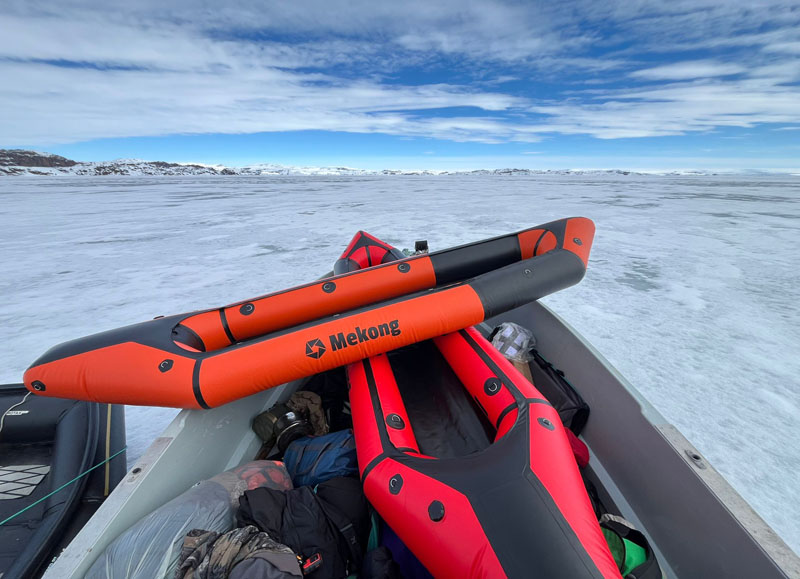
The first days of May were a time of intense preparation. The team arrived in stages in Upernavik, the remote Arctic town that serves as the expedition’s gateway to the ice. Sleds were assembled, equipment tested, and gear protected from the rain and snow that greeted them. A solar panel had been damaged during transport. The to-do list was long, the weather unpredictable, and the window to move was narrow.
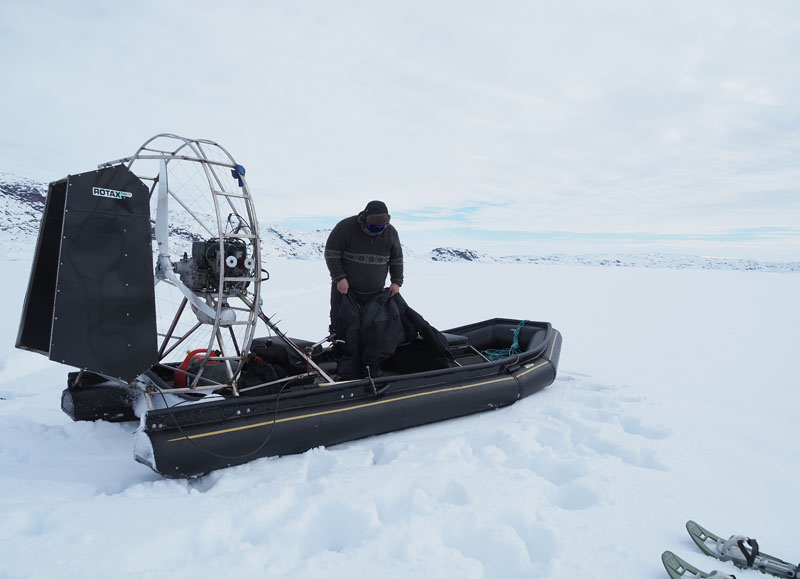
But before any of that, the Hydrocopter needed to prove itself.
The First Trials — and a Humbling Detour
On May 9th, the first serious trials began. Conditions looked promising — the Arctic light, the quiet of the fjord, a hint of optimism in the air. Then: a spark plug. One small, almost embarrassingly ordinary component decided to give up. The team had to turn back to Upernavik.
It was a reminder that out here, small things have a way of becoming very big ones.
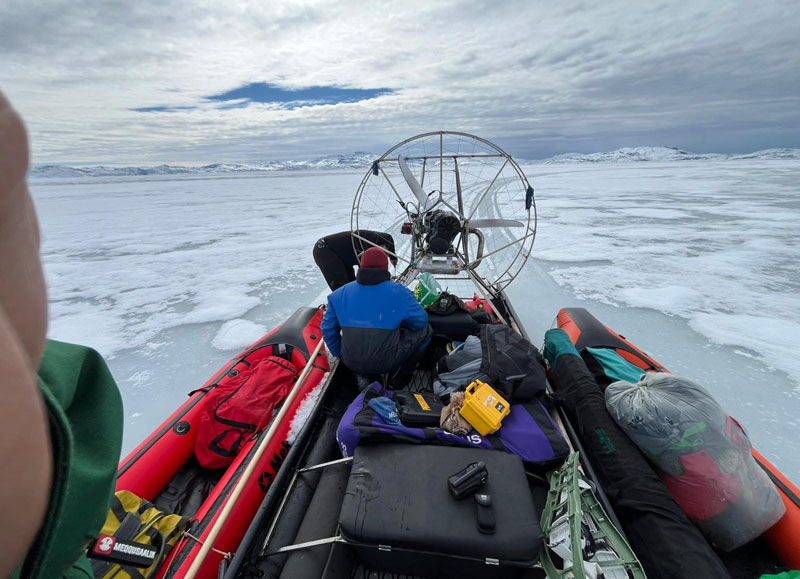
The repair was made. And on May 11th — Day 3 — the Hydrocopter returned.
JJ at the Helm
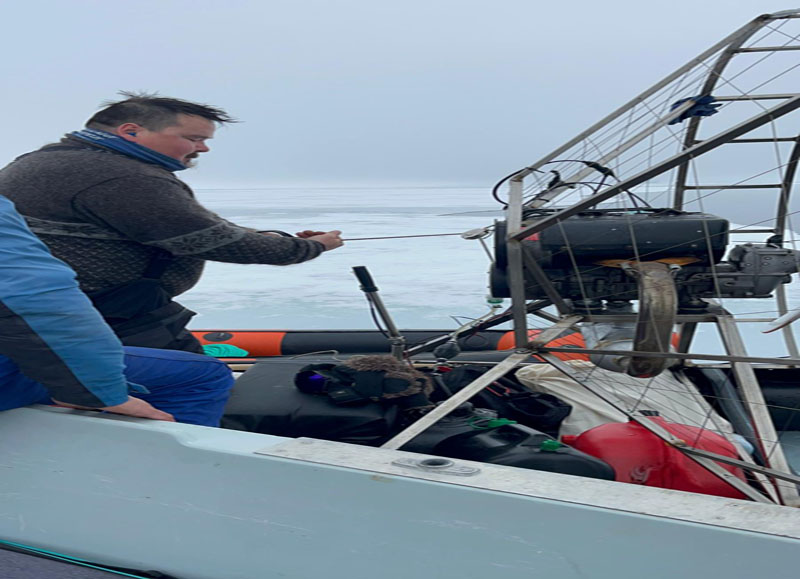
This is where the story becomes inseparable from one man: Jens Jacob Simonsen, known to everyone simply as JJ.
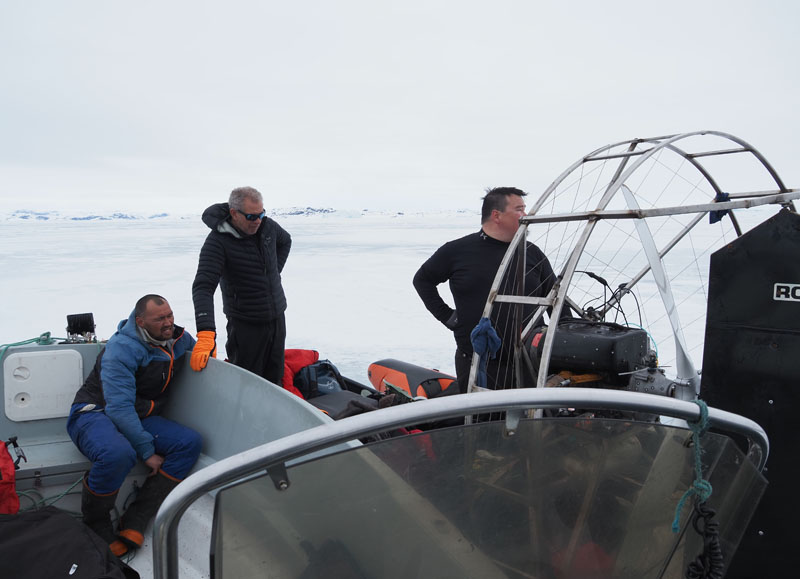
Greenlandic by birth and sea-hardened by a lifetime of Arctic experience, JJ is one of the most important figures in the history of the Windsled project. He knows this landscape in a way few people do: its moods, its dangers, its rhythms. When the Hydrocopter had another minor issue that morning, JJ solved it within minutes. That, too, is part of what makes him irreplaceable.
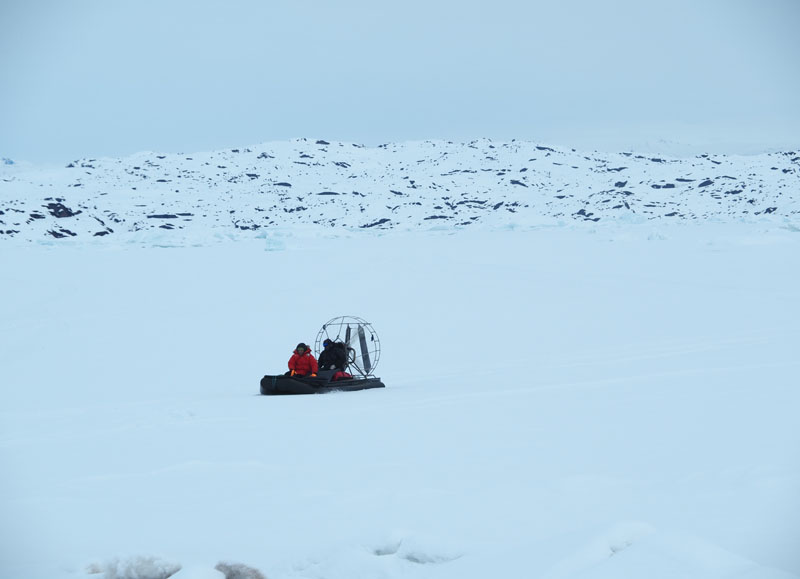
And then he drove. Through ice, seawater, snow, and every mixture of the three. Through moments that were, frankly, a little scary. But with JJ at the helm, fear has a way of dissolving into something else — something closer to wonder at the extraordinary world around you.
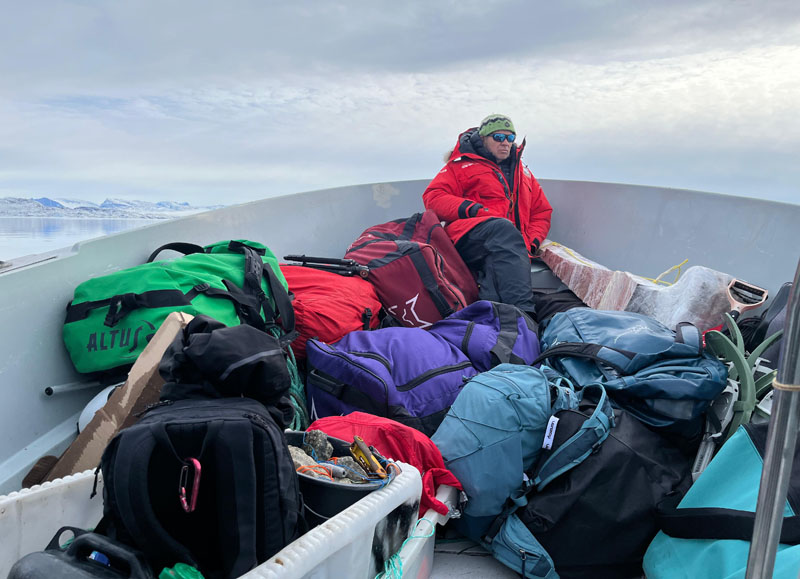
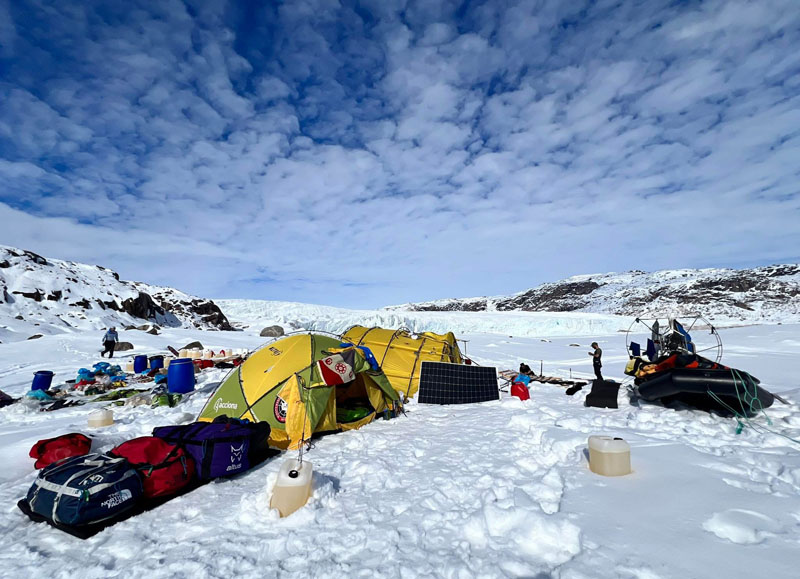
Antonio and Bendt were the first to set foot on shore. Camp was set up. Luggage ferried. Equipment crossed over. And then more luggage, more equipment, more crossings. JJ piloted the Hydrocopter for ten straight hours to get everything and everyone safely to land.
They rested at 3:00 AM.
A Milestone Written in Ice
What the Hydrocopter made possible that day was more than a logistical achievement. It was the first time in Windsled history that the team accessed the Northern Greenland Ice Cap without helicopter support. A 15-kilometer stretch of narrow fjord, broken sea ice, fierce tides, and currents — and, yes, the occasional curious seal — stood between the team and their goal. The Hydrocopter navigated all of it. JJ navigated all of it.
It was also essential for recovering the snowmobiles left on shore from a previous expedition — without them, the journey onto the Ice Cap would have been impossible.
The machine built in a Lithuanian garage had earned its place on the team.
What Comes Next
The Hydrocopter was an experiment. It is now something more: a proven asset, and possibly a permanent addition to future Windsled expeditions. And JJ — steady, skilled, quietly heroic — is, as ever, exactly where he needs to be.
The Ice Cap is ahead. The expedition has truly begun.