
2022 SOS ARCTIC – Greenland South Dome Circumnavigation
In just 27 days, from May 18 to June 14, the Windsled team covered 1,000 km during 2022 SOS Arctic expedition, completing Greenland’s last major milestone by crossing the South Dome and finishing the west-to-east traverse.
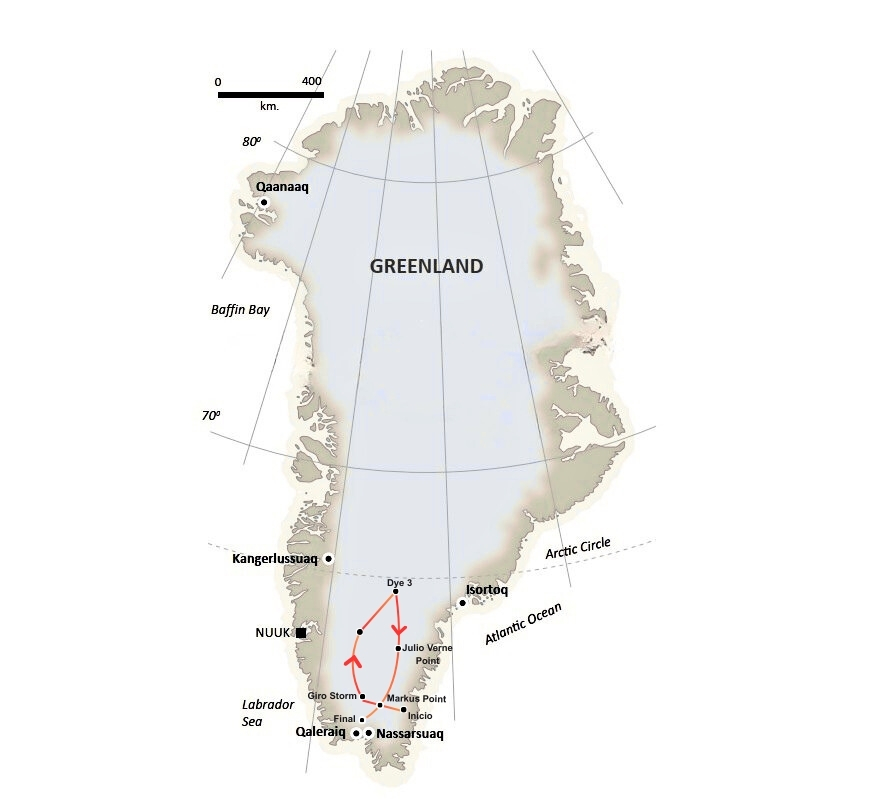
After nearly six years of relative inactivity of the WindSled in Greenland, partly due to the pandemic, 2022 SOS Arctic marked a decisive return to polar exploration on May 9th, 2022. This expedition represented a crucial step in reactivating the WindSled project and addressing the last major geographical challenge pending in Greenland.
The main objective was to circumnavigate the South Dome of the Greenland Ice Cap and to complete a west–east crossing, the final unaccomplished milestone in this region. Successfully achieving this route would close a historic chapter in Windsled exploration that began in 2000 with the first expedition that took place from Narsarsuaq to Kangerlussyaqan.
The expedition team consisted of six members, led by Ramón Larramendi, expedition leader and creator of the Windsled. Although initially planned for seven participants, with the last minute cancellation of Anne Conover.
Access to the ice sheet proved to be one of the most critical phases. The team required a first helicopter flight to reach the interior, landing near previously unknown nunataks in a largely unexplored area of southern Greenland. A second flight was gravely delayed, eight days with very limited supplies, highlighting the fragility of dependence on helicopters. This experience reinforced the need to reduce reliance on aircraft and to incorporate alternative transport solutions, such as snowmobiles, in future operations.
Finally, with the full team reunited and despite adverse weather conditions, on May 18th, 2022, they were able to leave the mountainous area where they had been confined.
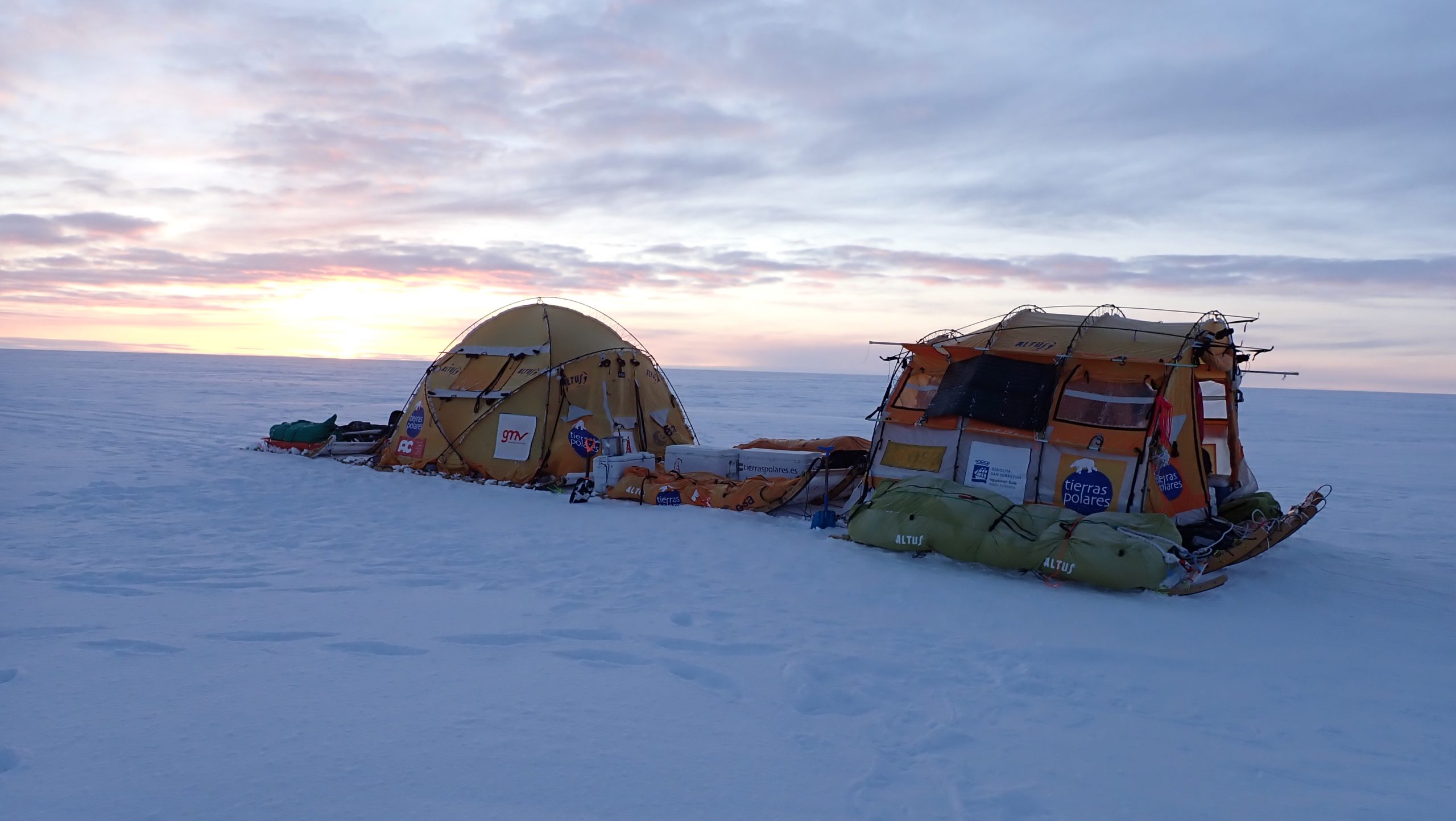
Navigation presented ongoing challenges. Unfavorable and unstable winds repeatedly complicated progress, forcing several prolonged stoppages. The team reached the abandoned DYE-3 military base, last accessed in 2014, now increasingly buried under snow, a visible sign of the changing Arctic environment.
One of the expedition’s key objectives was to reach the summit of the South Dome. However, four consecutive days without wind in the area ultimately prevented the team from achieving this goal. The prolonged standstill forced them to make a strategic decision and continue the journey. The team named this windless location “Julio Verne Point”.
As the expedition drew to a close, the team explored an unidentified and unmapped “rock” they had first seen in the distance during the outbound journey, located about 260 km from the planned endpoint. On the return trip, they confirmed it was a previously undocumented group of nunataks. Likely exposed by recent ice retreat, the area was later named “Windsled Harbor” and identified as a potential future access point for Windsled operations.
Team

Ramón Larramendi
Project Leader
Spain, Greenland
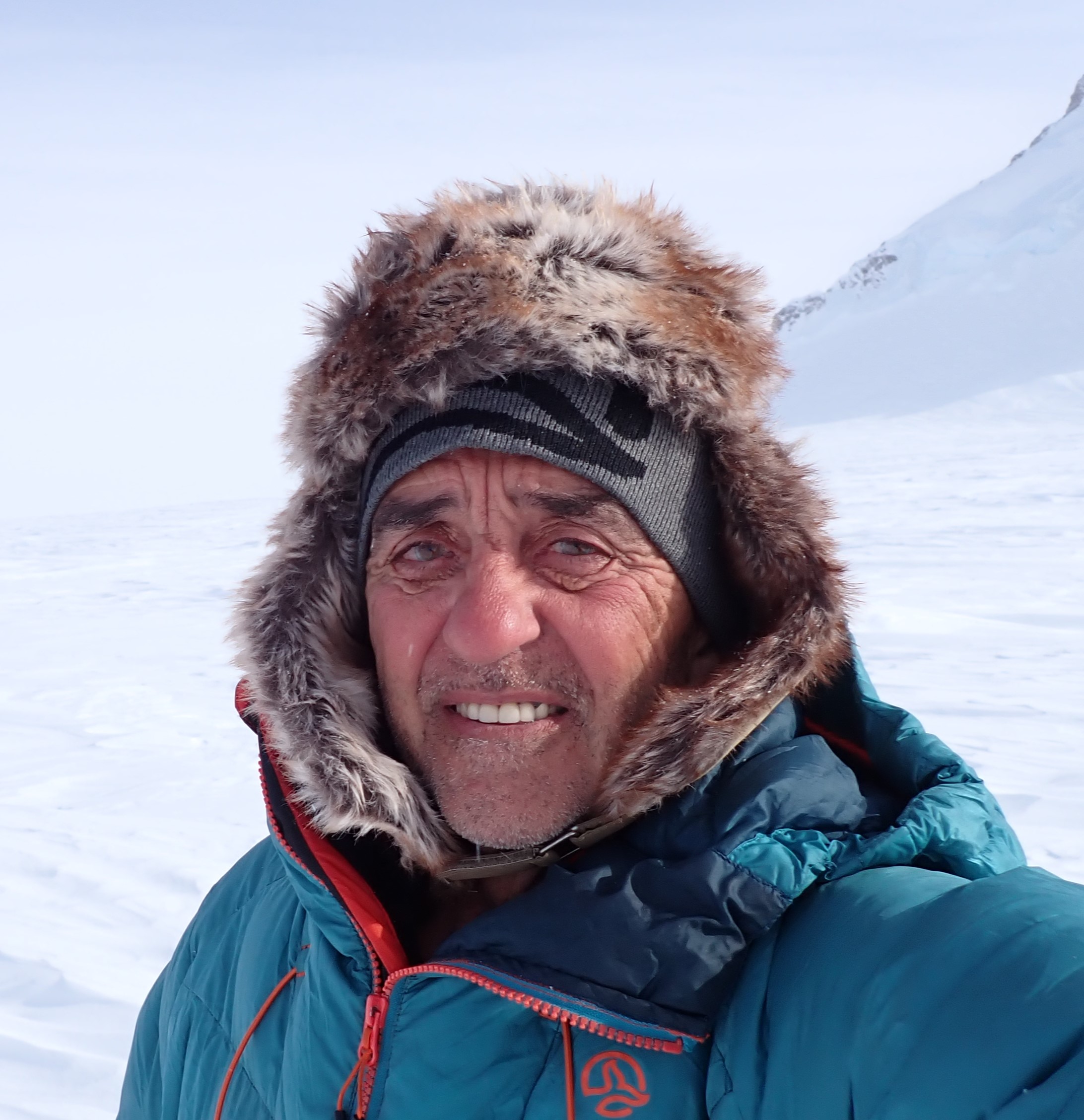
Juan Manuel Sotillos
Spain
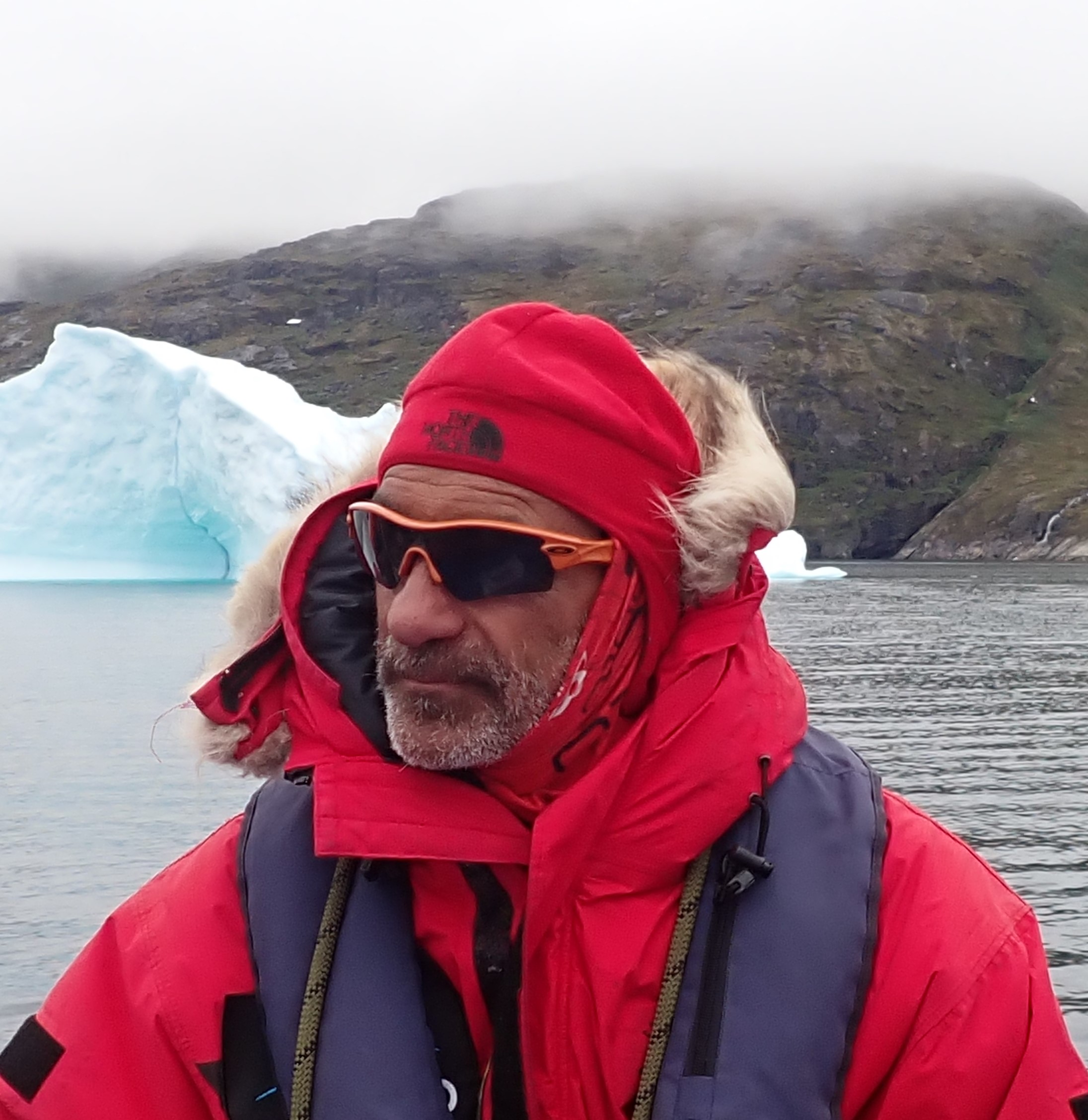
Marcus Tobia
Venezuela
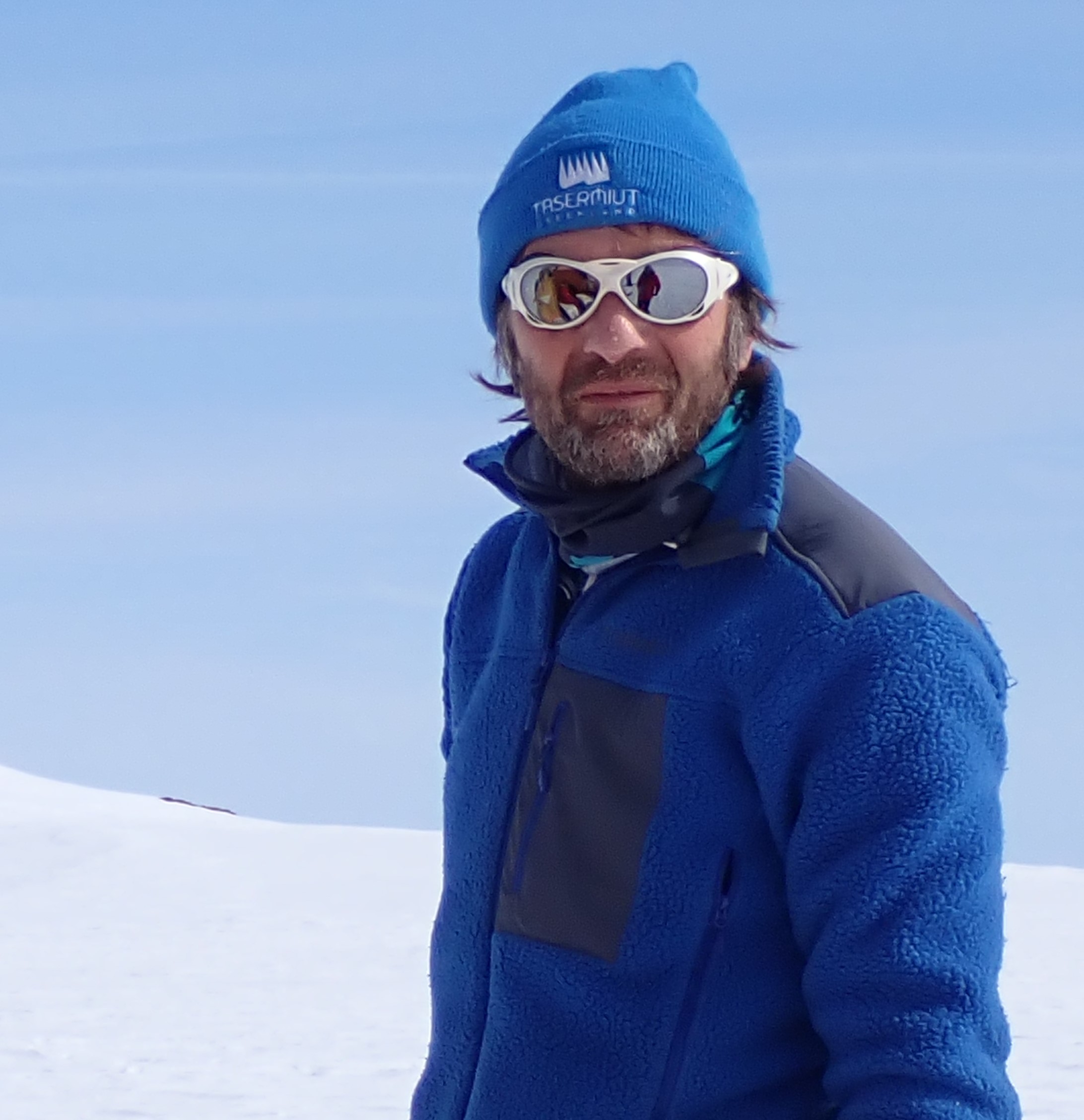
Carlos Pitarch
Spain
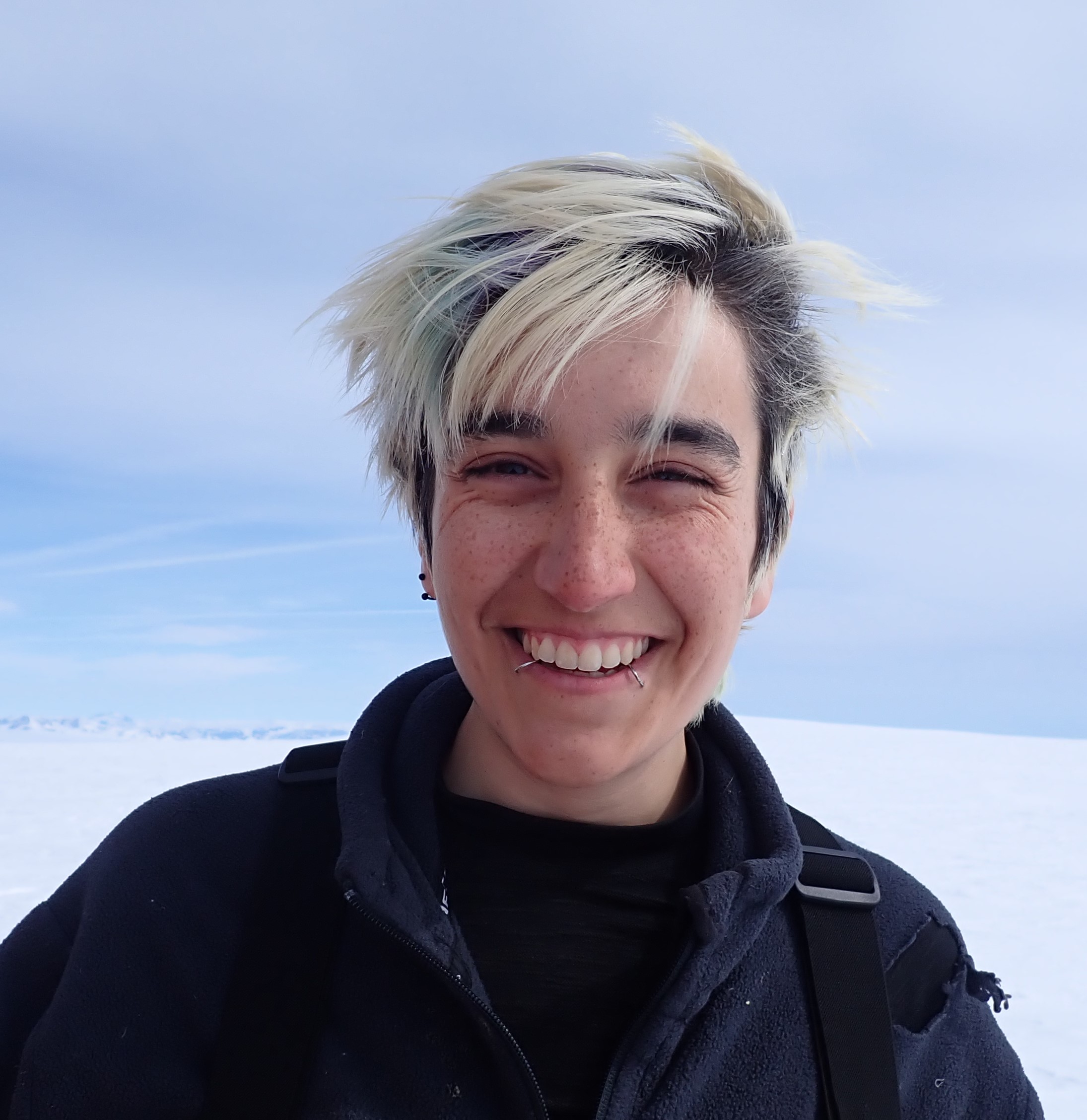
Lucia Hortal
Spain
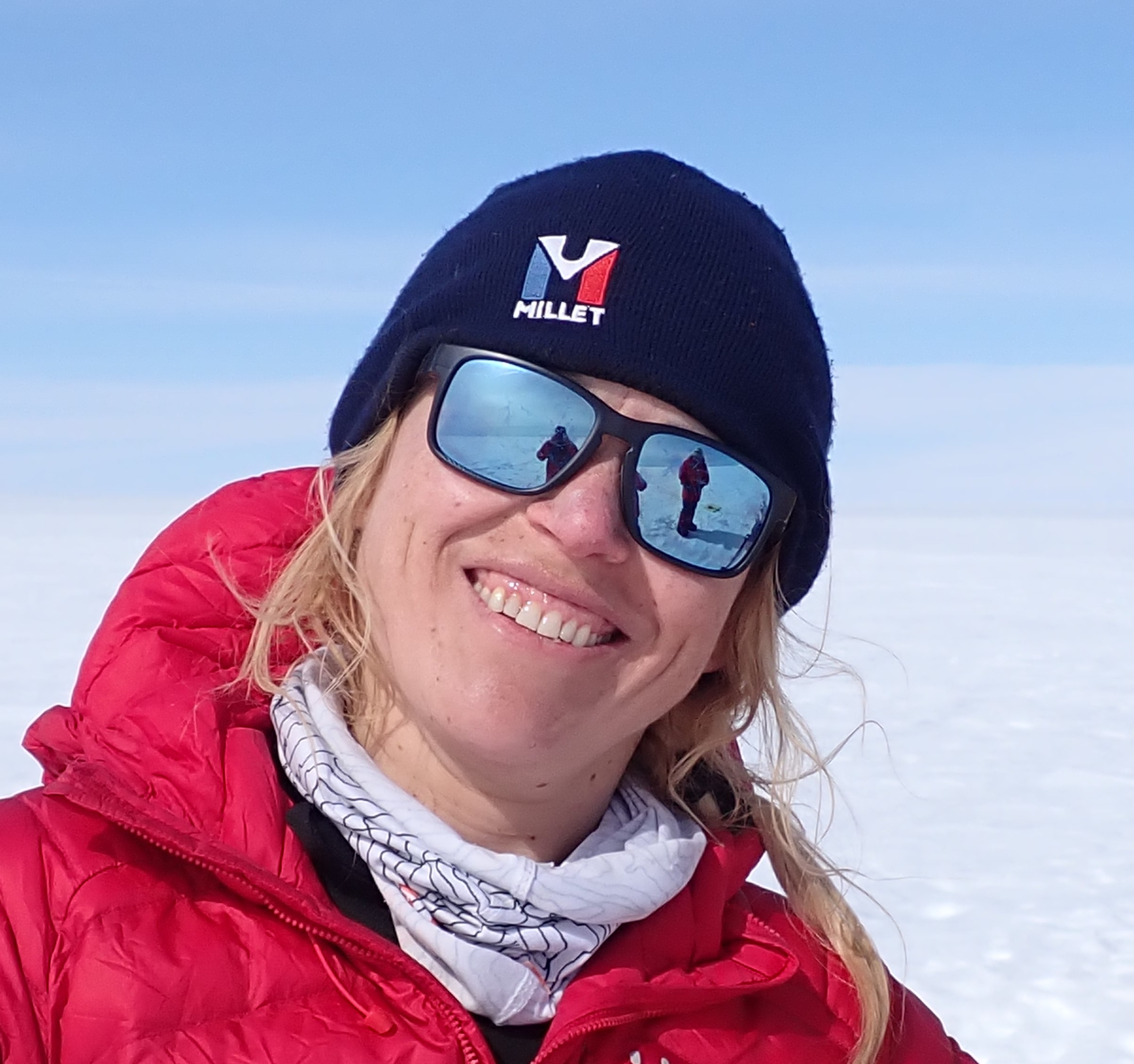
Begoña Hernández
Spain
Diary
One of the members of the expedition, journalist Juan Manuel Sotillos, was responsible for documenting the expedition.
Below you will find the articles published in “el Diario Vasco”
(Spanish version)

Gallery
Press
Below you could find some of the most notable news about the 2022 SOS ARCTIC Expedition.


Scientific Projects
Scientific Projects conducted during the SOS ARCTIC 2022 – Greenland South Dome Circumnavigation
MicroAirPolar -Universidad Autónoma de Madrid (Spain)
Lead researchers: Dr. Ana Justel, Dr. Antonio Quesada
During SOS Arctic 2022, the Inuit WindSled carried an active air-sampling system along the west–east traverse of the Greenland Ice Sheet (approx. 1,016 km) to collect airborne microorganisms and particles characteristic of the central ice plateau. These samples feed into MicroAirPolar’s long-term effort to understand microbial dispersion, resilience, and their response to climate change in polar atmospheres.
SOLID – Centro de Astrobiología (CAB, INTA-CSIC, Spain)
Lead researcher: Dr. Víctor Parro
Ice and snow samples collected during the traverse were assigned to the SOLID (Signs Of Life Detector) programme, supporting the development and validation of biosignature detection techniques under real polar field conditions that are relevant for future planetary exploration missions.