
2018 -2019 UNEXPLORED ANTARCTICA
Unexplored Antarctica was a historic expedition — the first purely scientific journey carried out with Windsled in Antarctica, featuring 10 research projects. The team covered 2,578 km in 52 days and ascended Dome Fuji with the largest sled ever built.
Thanks to one of the research projects carried out during this expedition, the prestigious journal Nature published an article featuring the findings.
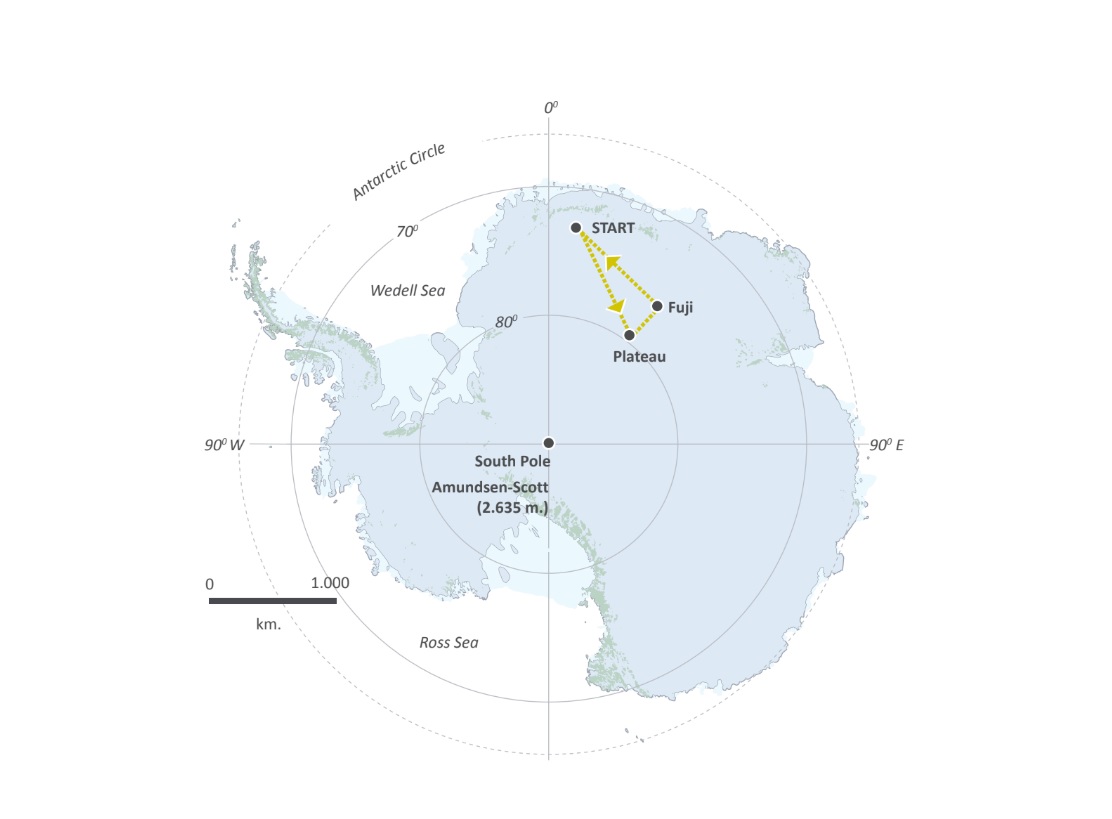
On December 22, 2018, the Windsled Team departed from Cape Town, South Africa to Novo Air Base, where their journey across Antarctica would begin. The Unexplored Antarctica expedition covered 2,578 km in 52 days, traveling through one of the most remote and inhospitable regions on the planet and enduring temperatures as low as –42ºC.
This expedition, which was purely scientific in nature, faced three very clear and defined challenges on this occasion:
- Scientific challenge: this was the backbone of the expedition. To demonstrate the scientific potential of the platform. Windsled was able to carry out 10 scientific projects.
- Geographical challenge: the objective was to ascend to the Dome Fuji, where air currents were unfavorable or even windless, on a round trip.
- Technical challenge: on this occasion, Windsled was larger and had greater capacity, being able to carry a crew of four people and up to two tons of weight.
An experienced team of four members took on this journey:
- Ramón Larramendi, project leader and inventor of the Windsled.
- Manuel Olivera, veteran explorer and partner of Ramón in the circumpolar expedition.
- Ignacio Oficialdegui, expert explorer and companion of Ramón on previous expeditions.
- Hilo Moreno, technical guide at the Spanish Antarctic Base and member of expeditions to Greenland.
WindSled Structure
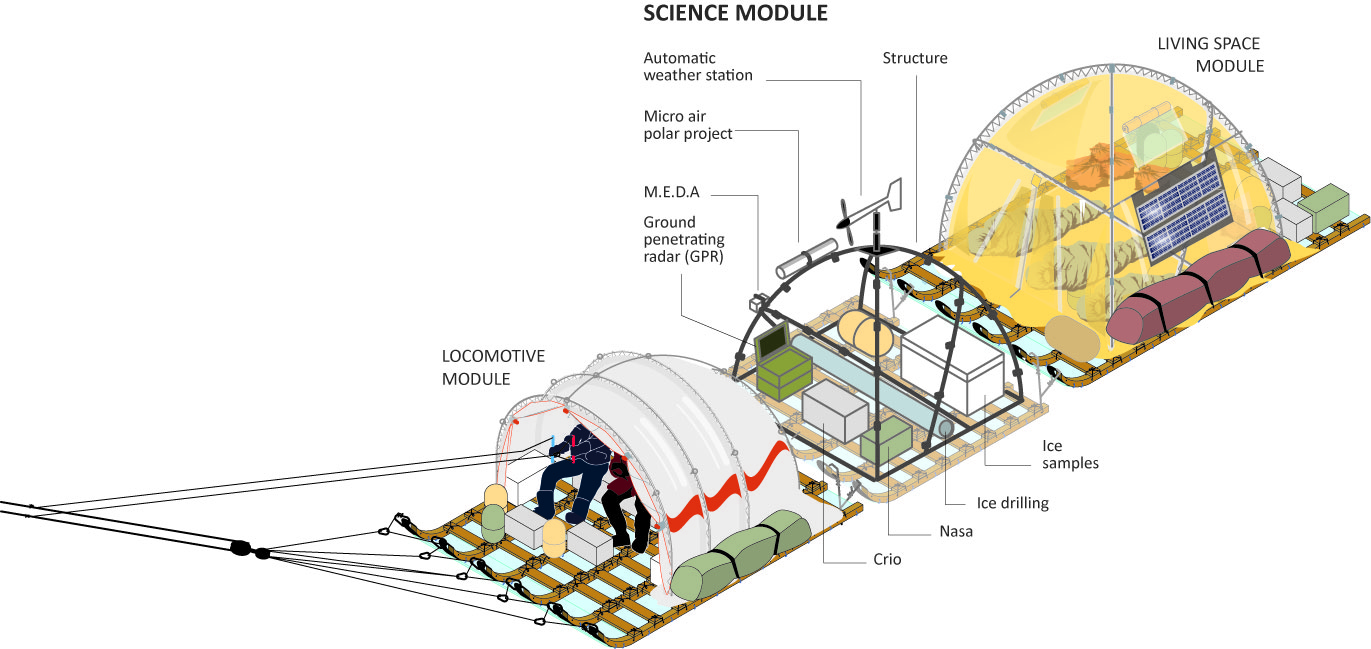
During the expedition, the WindSled carried more than two tons of cargo, divided into three modules:
- Locomotive module: Used for steering and piloting, this module also serves as a workspace and a shelter during storms or extreme cold.
- Cargo module: Designed to carry all scientific gear, food supplies, communication systems, and collected samples. It also includes solar panels (10–12 m²) to generate renewable energy stored in six large batteries.
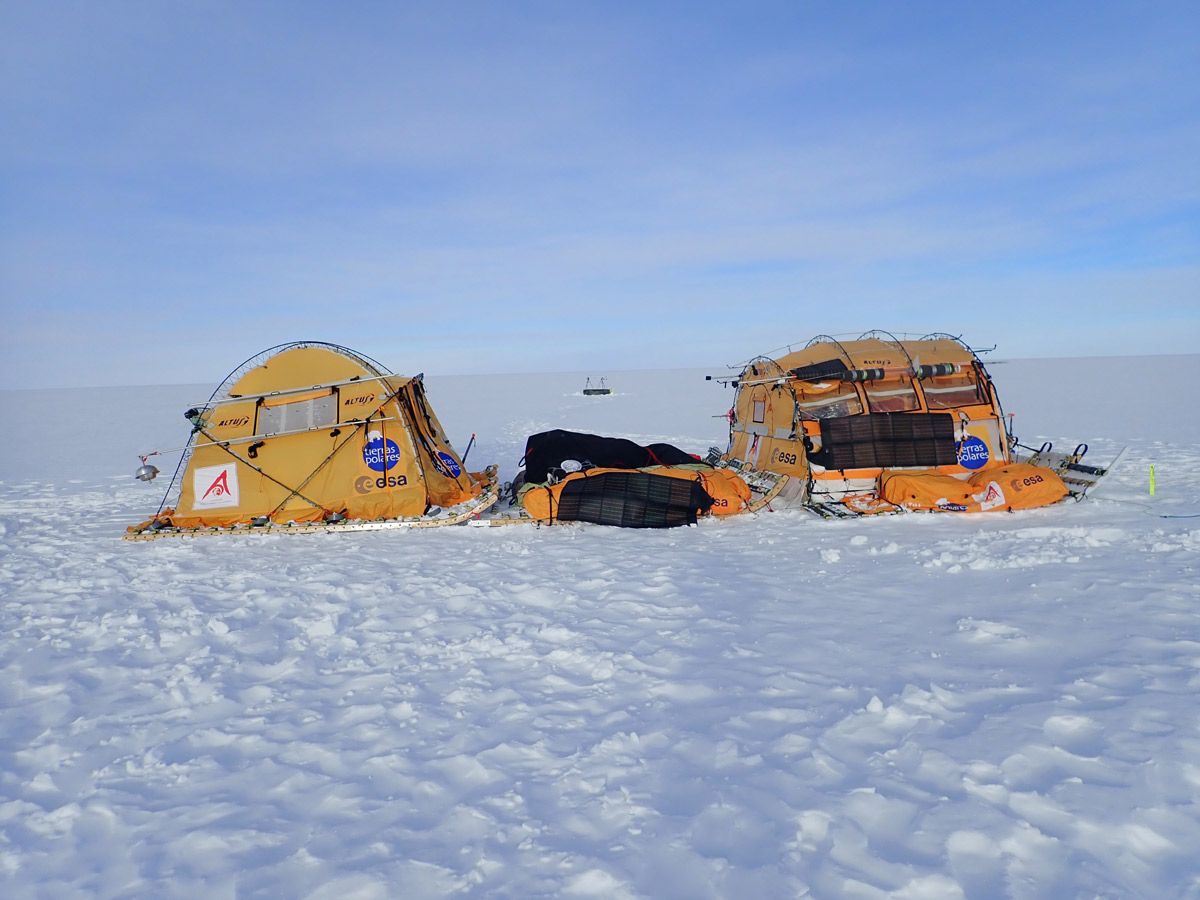
- Habitable module: A large, specially designed tent that withstands Antarctic storms and provides a living space for the crew, using passive solar heat to improve comfort.
Overall, the WindSled measures 9 meters long and 4 meters wide, and relies on a set of 20 traction kites of various sizes (from 5 to 150 m²), adaptable to wind conditions ranging between 6 and 60 km/h. The control lines extend up to 350 meters to maximize kite performance in the Antarctic wind column.
Team
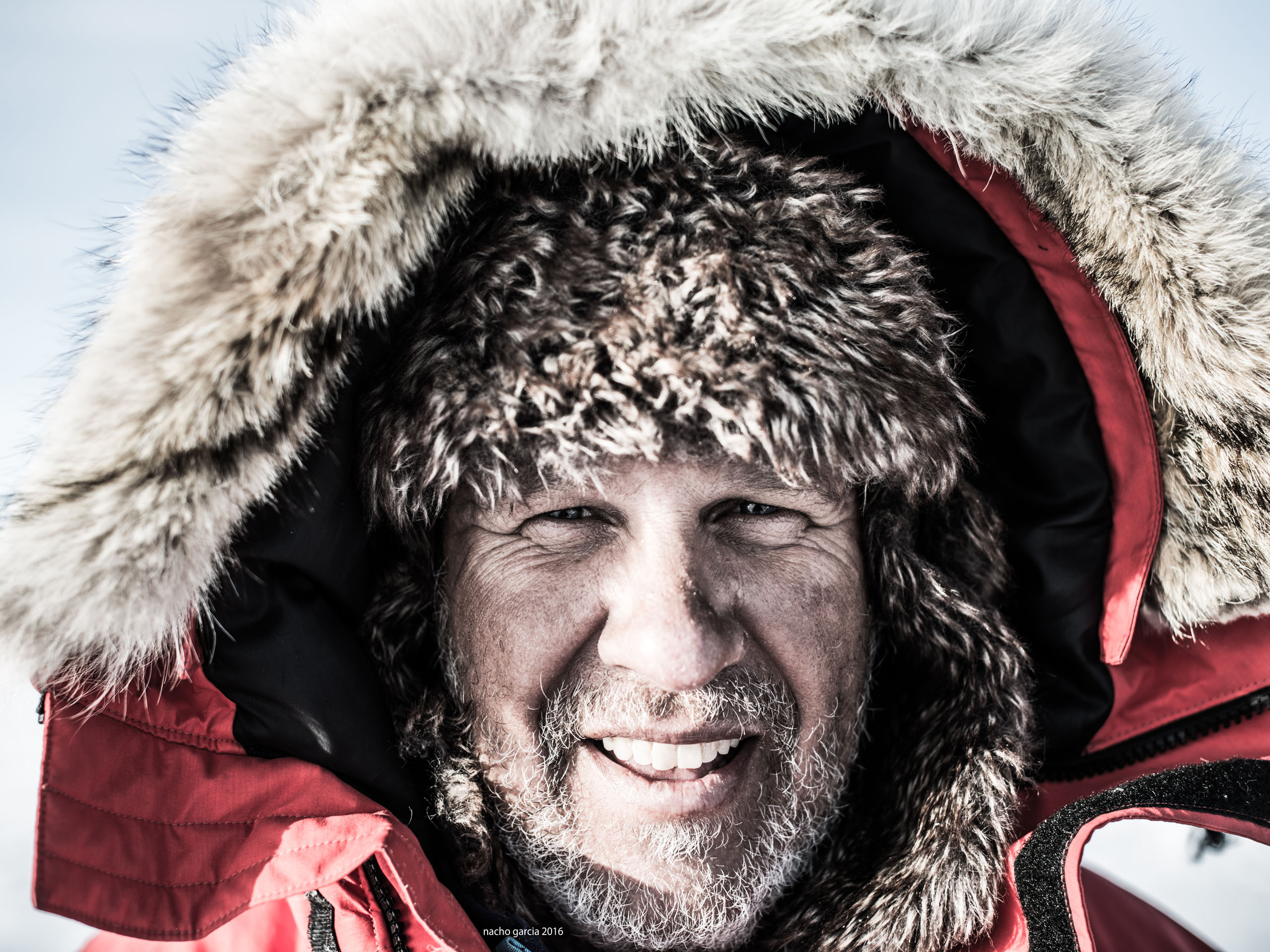
Ramón Larramendi
Project Leader
Greenland, Spain.
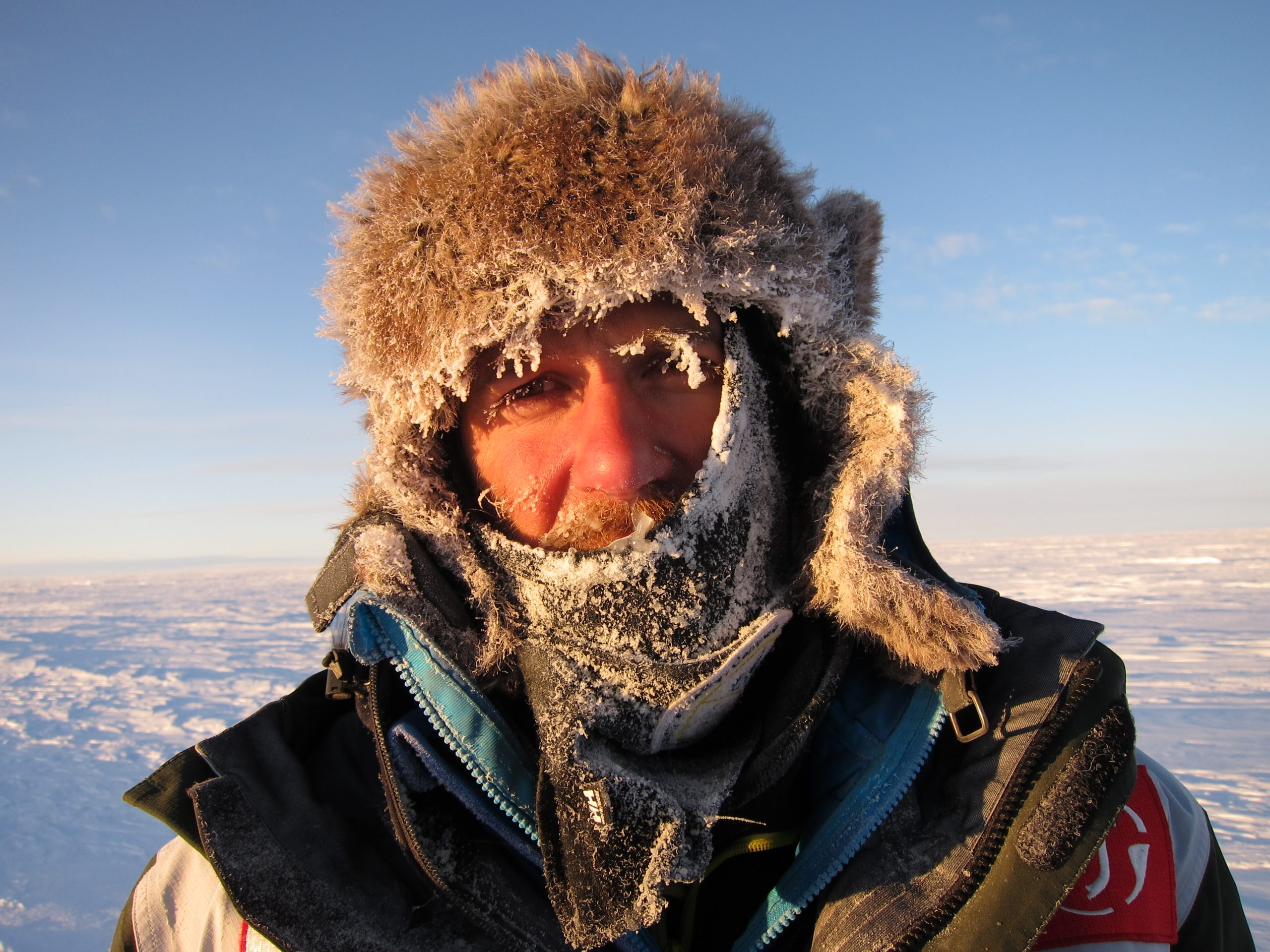
Manuel Olivera
Civil Engineer, Explorer
Spain
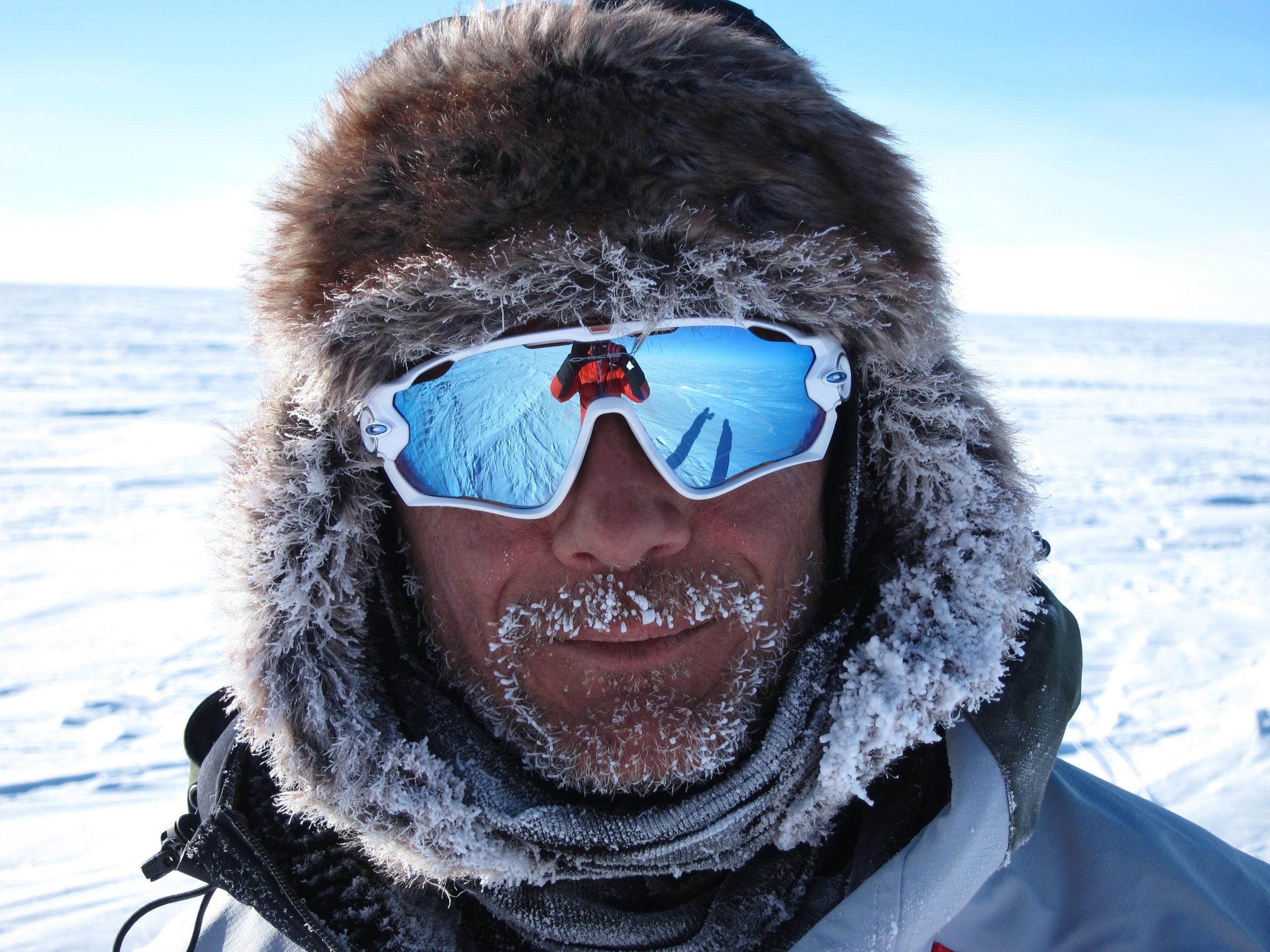
Ignacio Oficialdegui
Renewable Energy Expert, Explorer
Spain.
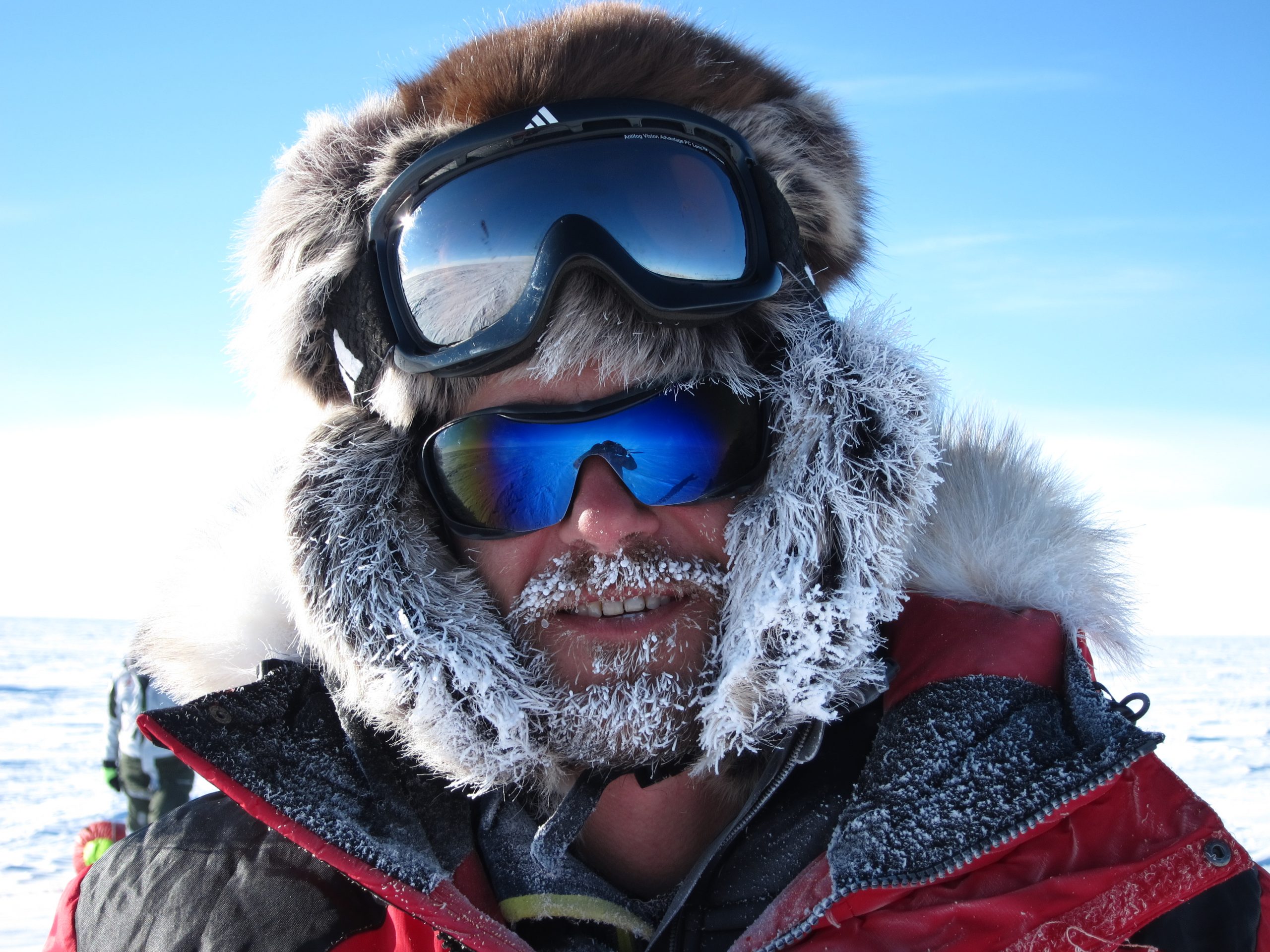
Hilo Moreno
Technical guide, Explorer
Spain
Diary

Gallery
Press






Check out the PDF and find more relevant news about the expedition!
Scientific Projects
Scientific Projects conducted during the Unexplored Antarctica 2018-2019
GESTA/ Galileo Experimentation & Scientific Tests in Antarctica/ European Space Agency (ESA)/ WindSled Antarctica 2018–19 (Dome Fuji)
GESTA -Galileo Experimentation & Scientific Tests in Antarctica (ESA)
Platform: WindSled Antarctica 2018–19 (Dome Fuji)
Lead: Dr. Javier Ventura-Traveset (ESA, Head of the Galileo Navigation Science Office)
Coordination: ESA GNSS Science Support Centre (GSSC), ESACIndustry support: GMV (antenna and signal-reception testing during the 2018–19 campaign)
WindSled hosted GESTA to evaluate Galileo/GNSS performance on a zero-emission, mobile platform across the Antarctic plateau. The campaign logged positioning and signal quality at high southern latitudes and very low temperatures –including some of the most southerly Galileo positioning fixes recorded to date –to inform navigation, safety, and instrument design for polar operations.
Experiments during the traverse (summary):
- High-latitude Galileo positioning: continuous fixes and accuracy assessment during long traverses.
- Extreme-conditions testing: receiver and antenna behavior under cold, vibration, and low-pressure environments.
- GNSS performance metrics: signal availability, SNR, acquisition/lock time, multipath/cycle slips, uptime.
- Ionospheric/auroral effects: impact on tracking and dilution of precision (DOP); tests included ESA-designed receivers.
Shallow Coring/ University of Maine (USA): Climate Change Institute (CCI)/ WindSled Antarctica 2018–19 (Dome Fuji)
University of Maine – Climate Change Institute (CCI)
Leads: Professor Paul A. Mayewski, Dr. Andrei V. Kurbatov (University of Maine, CCI)
WindSled supported a shallow-coring program to study climate variability on the East Antarctic plateau. Using a lightweight drill, the team recovered snow/ice cores (~1–6 m depth) along the traverse. Samples were later analyzed at CCI for major ions, trace chemistry, particulates, gases and microbiology, with the dual aim of (i) extracting environmental signals from this largely unsampled interior and (ii) evaluating WindSled as a mobile platform for future coring campaigns in East Antarctica.
MicroAirPolar -Universidad Autónoma de Madrid (with AEMET)
Leads: Dr. Ana Justel, Dr. Antonio Quesada
Airborne microbial and aerosol sampling along the traverse to study dispersion, diversity and environmental drivers over the East Antarctic plateau.
MOTO (Muon Twin Observers) -University of Alcalá
Lead: Dr. Juan José Blanco Ávalos
Measurement of the natural radiation environment with a muon detector to assess the feasibility of systematic space-physics observations from a mobile polar platform.
MEDA (Mars Environmental Dynamics Analyzer) -University of Alcalá and CAB (INTA-CSIC)
Leads: Dr. Miguel Ramos, Dr. José Antonio Rodríguez-Manfredi
Field exercises with MEDA sensors to characterize temperature, pressure, humidity, wind, radiation and dust under Antarctic conditions relevant to planetary missions.
SENTINEL -IDAEA-CSIC
Lead: Dr. Jordi Dachs
Sampling of air, snow and soils to investigate the presence and transport of persistent organic pollutants and their accumulation pathways in Antarctic ecosystems.
SOLID (Signs of Life Detector) -Centro de Astrobiología (INTA-CSIC)
Lead: Dr. Víctor Parro
Portable immunoassay instrument applied to Antarctic samples to detect biosignatures in situ and validate life-detection protocols for future exploration.
ANTAIR (Antarctic Air Temperature Transect) -University of Alcalá
Lead: Dr. Miguel Ángel de Pablo
Continuous air-temperature measurements from coast to plateau inter-compared with nearby AWS stations to build a transect-based Antarctic temperature profile.
Deliquescence Experiment -NASA Ames Research Center
Lead: Dr. Alfonso F. Dávila
Tests on sodium-chloride deliquescence to evaluate the potential for transient liquid water formation under extremely cold and dry Antarctic conditions.
HELIOS -University of Valencia
Lead: Dr. Manuel Porcar
Collection and analysis of microbial communities colonizing photovoltaic surfaces mounted on the sled to understand survival and biofilm formation in harsh environments.
Forecasting and AWS Support -AEMET (Spanish Meteorological Agency)
Leads: Dr. Sergi González, Francisco Javier Sanz de las Heras
Dedicated meteorological forecasting for route planning and an onboard AWS recording wind and related variables to support safety and science logistics.